Casa Batlló
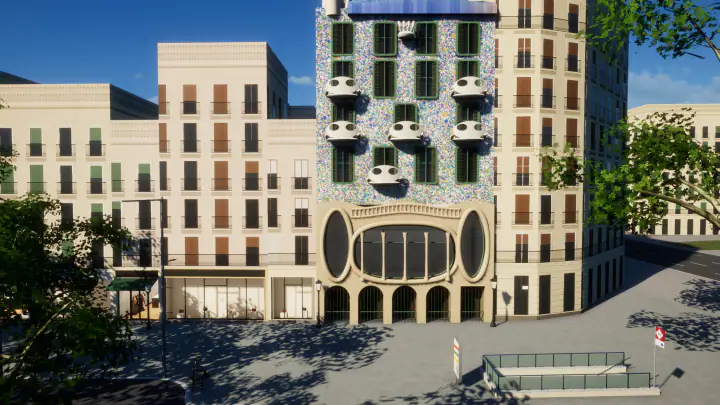
Passeig de Gràcia 43
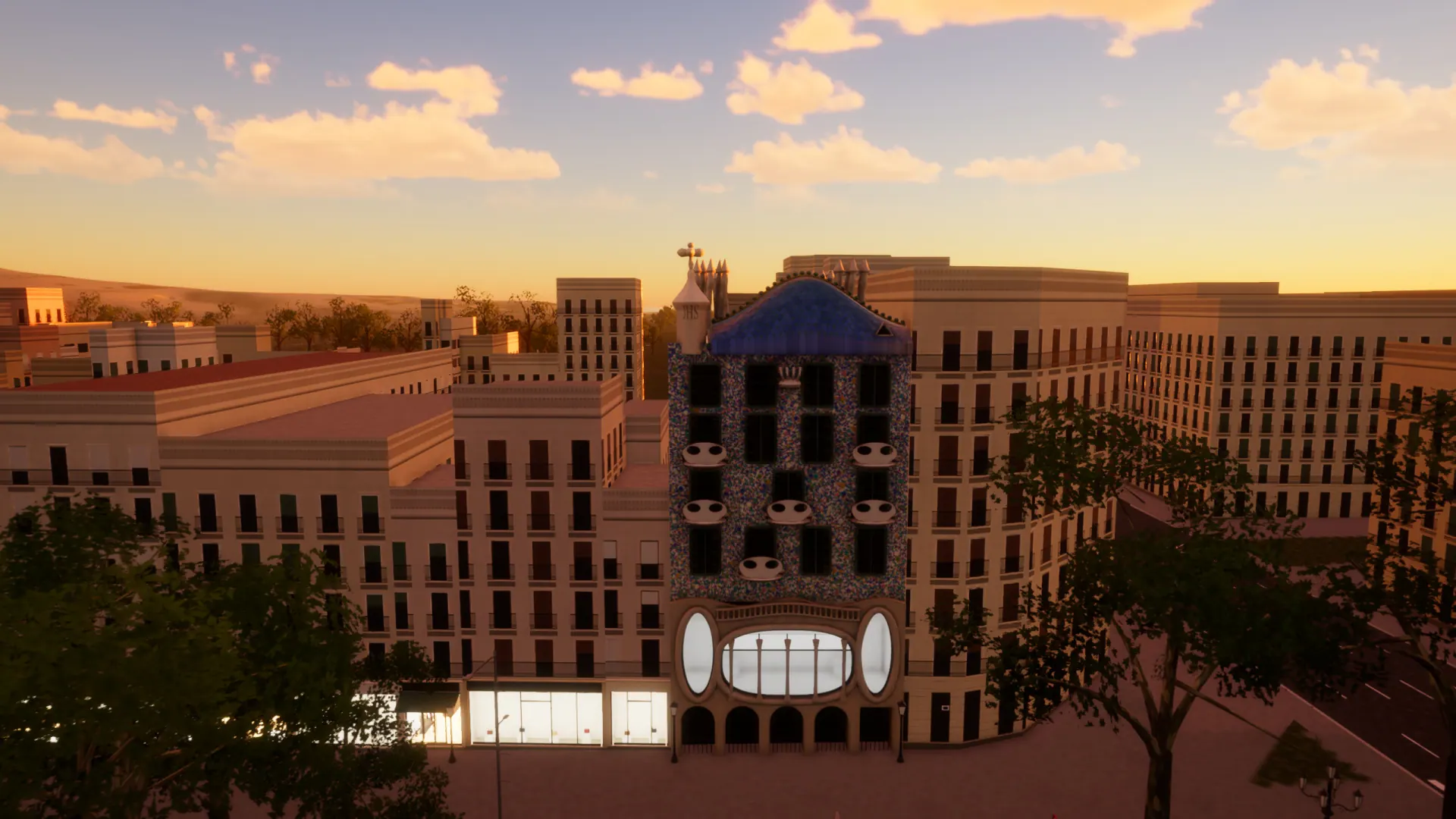
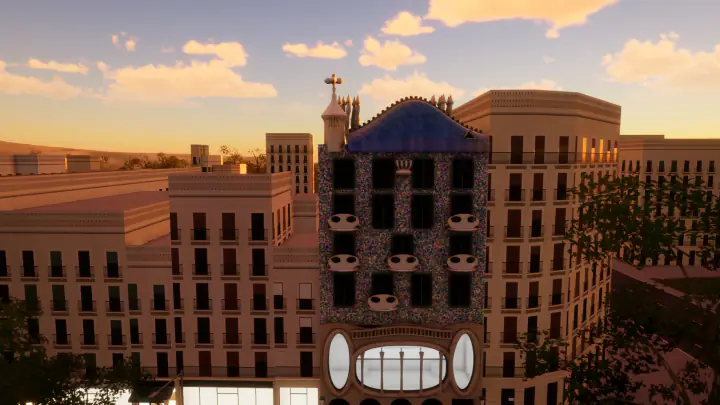
The house of bones. Gaudí’s façade shifts from golden orange to blue-green in broken tile; the roof rises in coloured scales like a dragon’s back.
- Architect
- Gaudí
- Remodelled
- 1904–1906
- UNESCO
- 2005
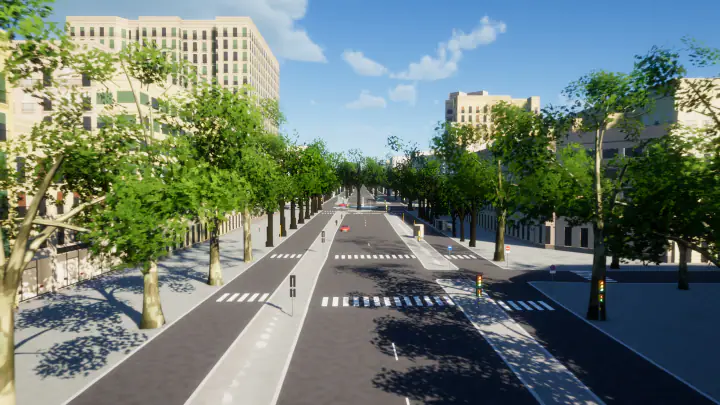
Passeig de Gràcia. Rebuilt to the metre.
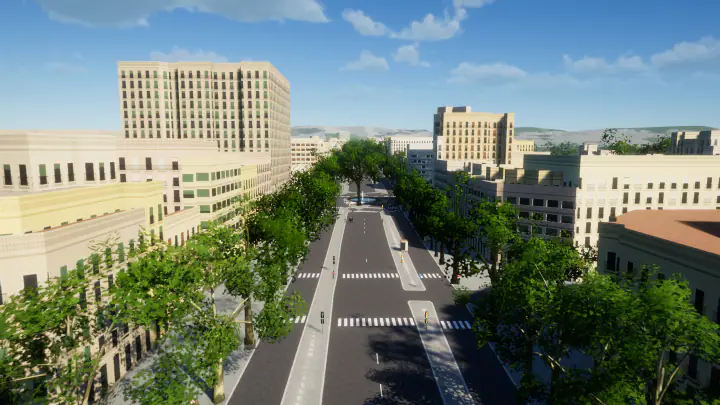
Evening over the Eixample. The Passeig de Gràcia climbs from the Plaça de Catalunya towards Gràcia, past Gaudí’s two houses.
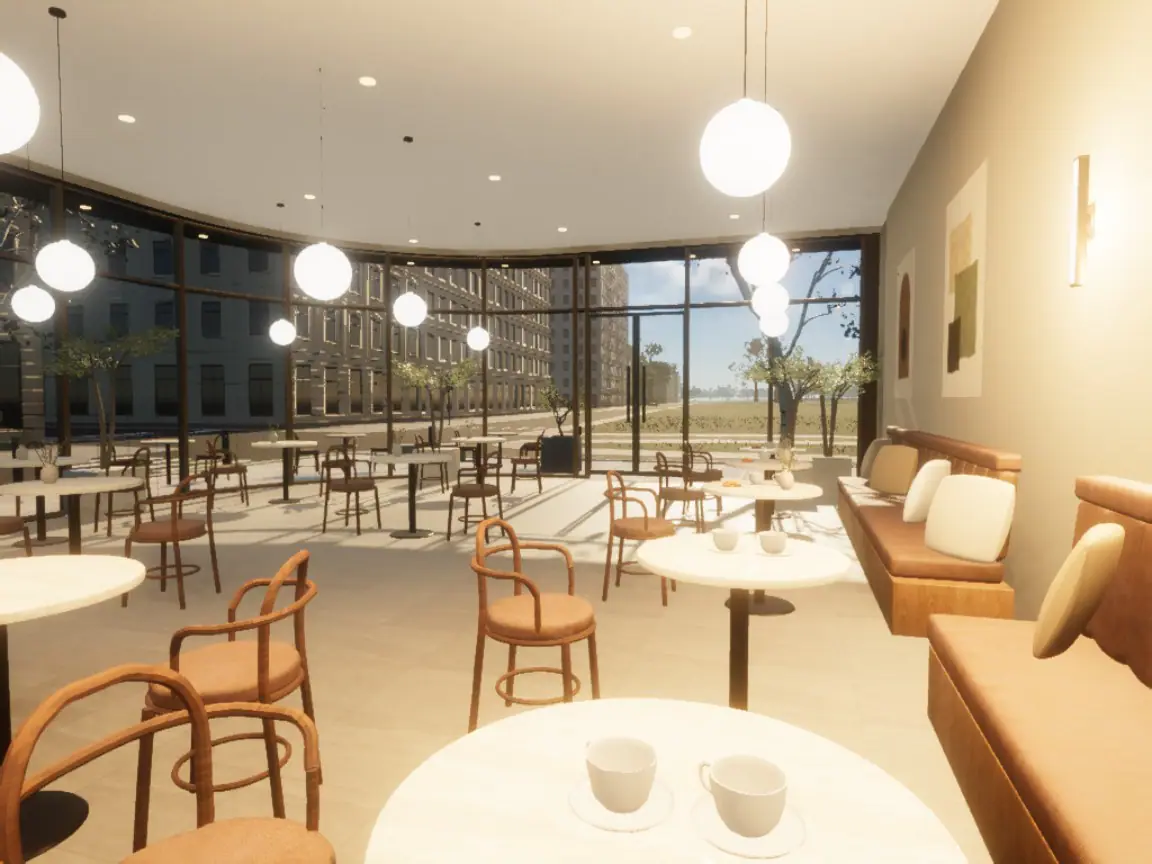
This is not a picture of Barcelona. It is Barcelona, built on the real map: every street where OpenStreetMap draws it, every height from the survey, every plane tree where it grows, every shop under its own name. Walk it, buy a lot beside it, build on it.
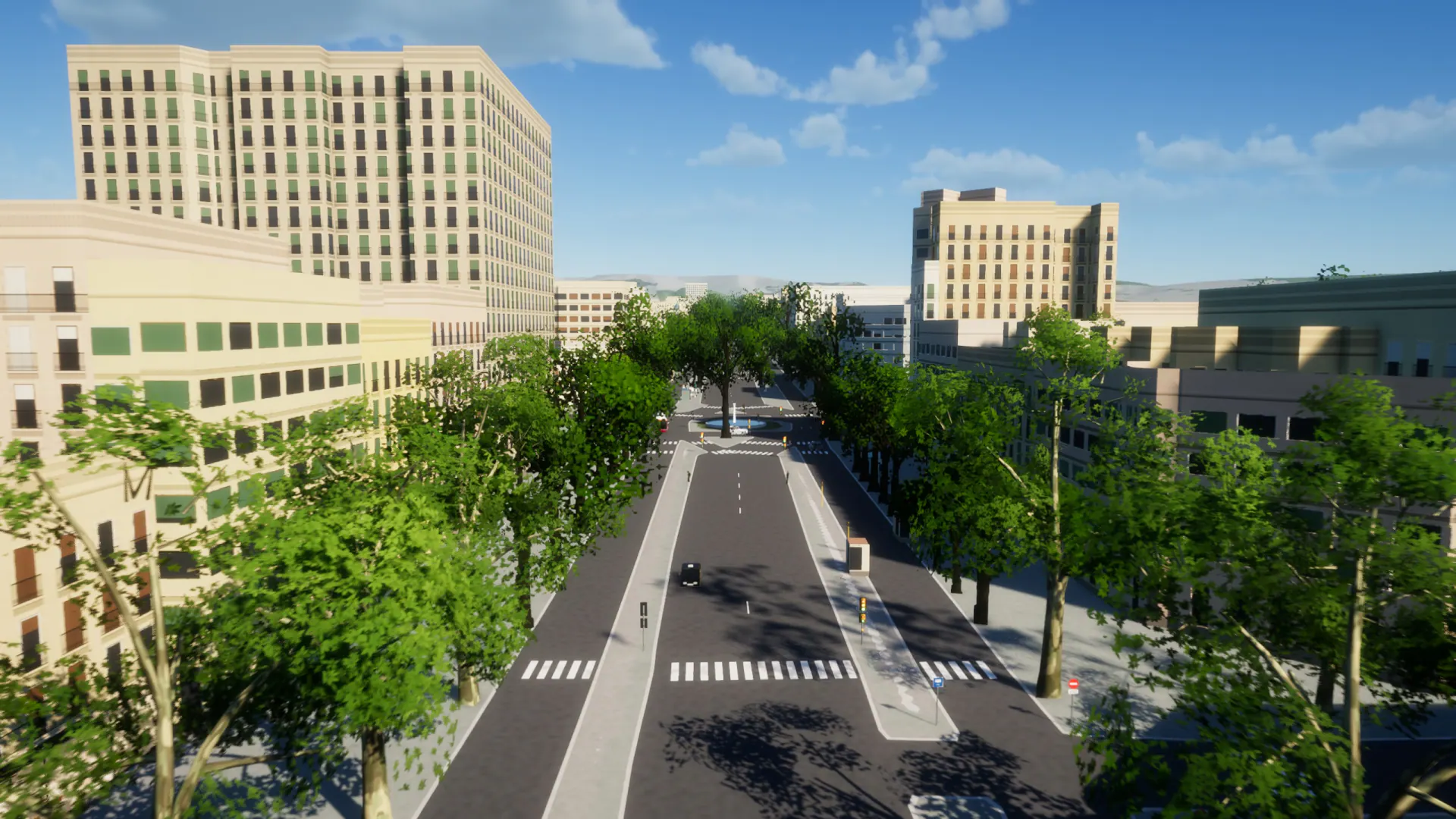
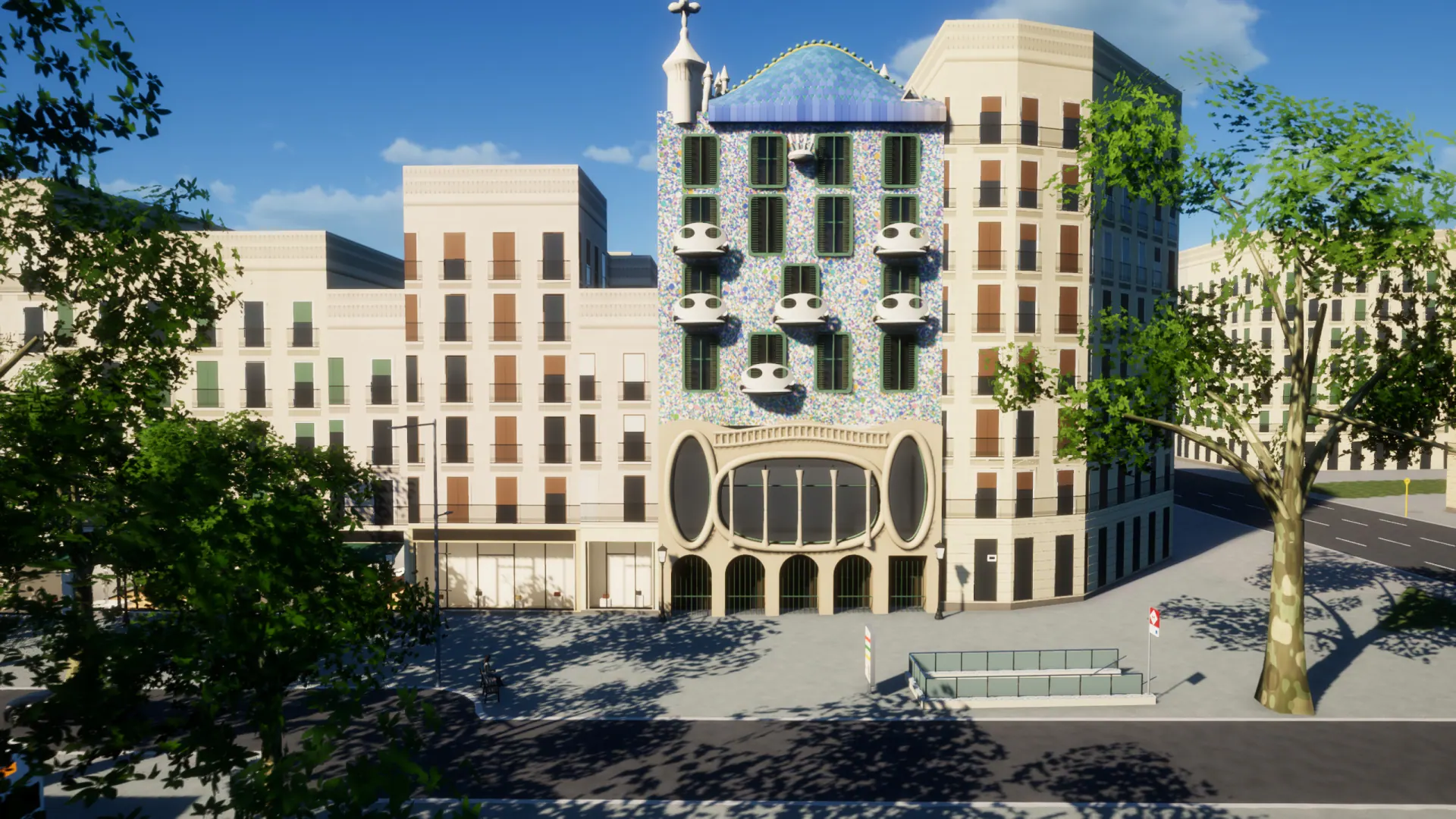
Gaudí remade a house of 1877 between 1904 and 1906: a façade of broken-tile mosaic, balconies like masks, a roof like a dragon’s back. Beside it on the Illa de la Discòrdia, Puig i Cadafalch’s Casa Amatller.
Scroll to turn them · drag to look around
Passeig de Gràcia 43
The house of bones. Gaudí’s façade shifts from golden orange to blue-green in broken tile; the roof rises in coloured scales like a dragon’s back.
La Pedrera · Passeig de Gràcia 92
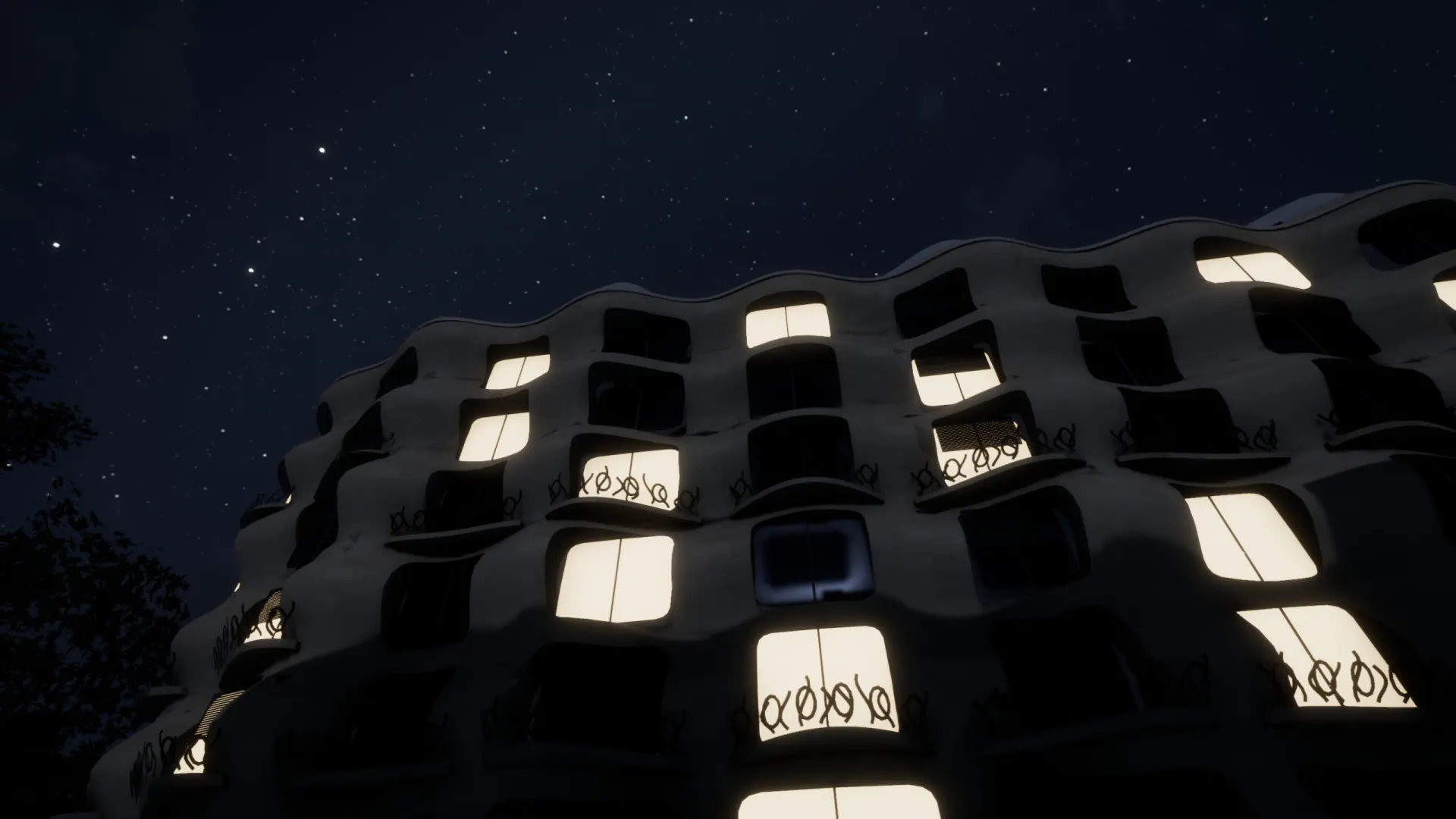
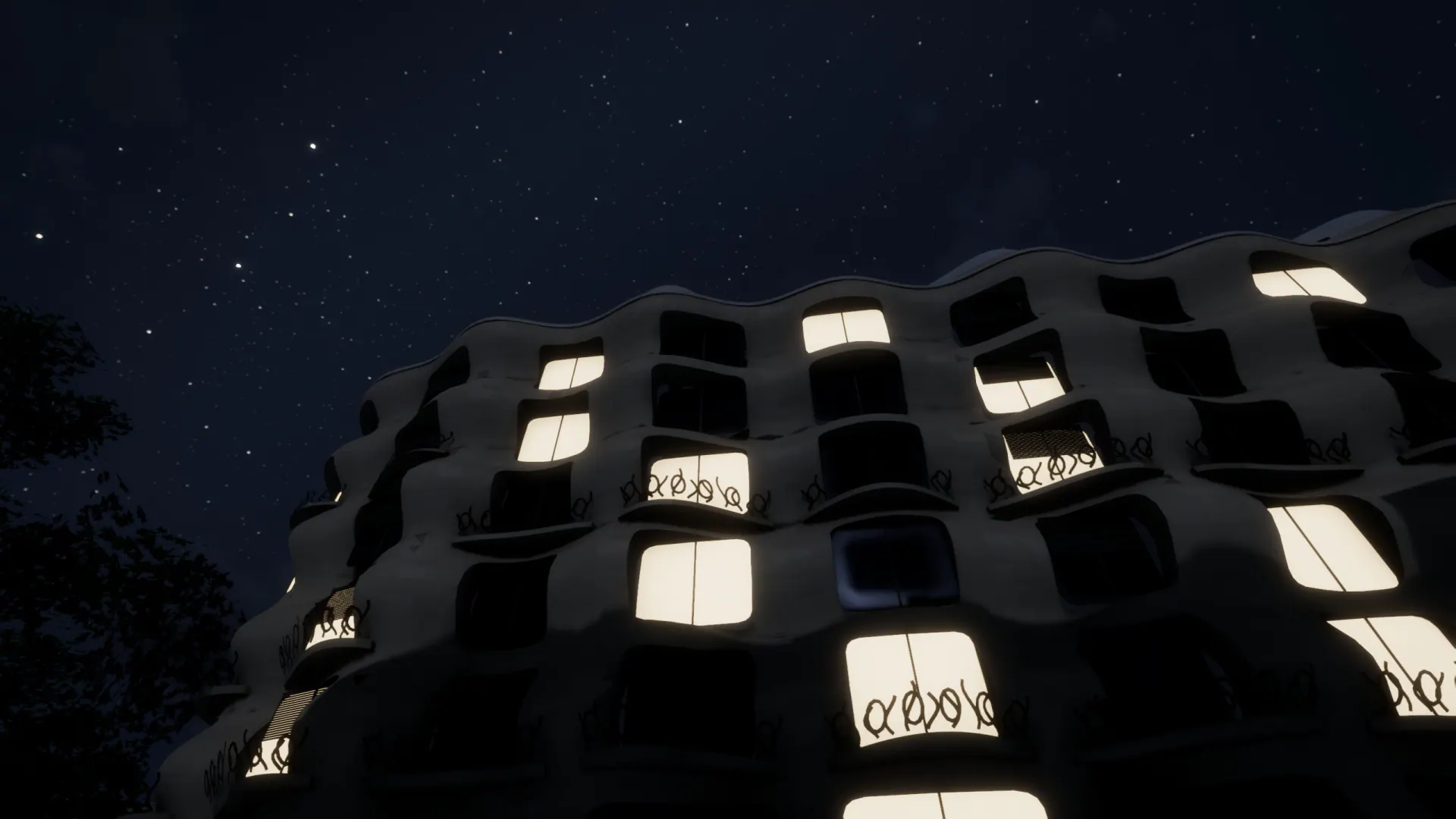
Built for Pere Milà and Roser Segimón, 1906–1912. Barcelona called it La Pedrera, the quarry; on its roof stand the chimneys known as witch-scarers.
Passeig de Gràcia
A cast-iron candelabra of five lanterns, modelled piece by piece. 490 street lamps light our Passeig at night.
Frank Gehry · Port Olímpic
Frank Gehry’s golden fish, made for the Olympic Games of 1992, shines over the beach at the Port Olímpic.
1.3 km. Two houses by Gaudí. 141 shops. One passeig.
1.3 kilometres from the Plaça de Catalunya to Gràcia: the plane trees, the hexagonal paving and Pere Falqués’s bench-lamps of 1906.
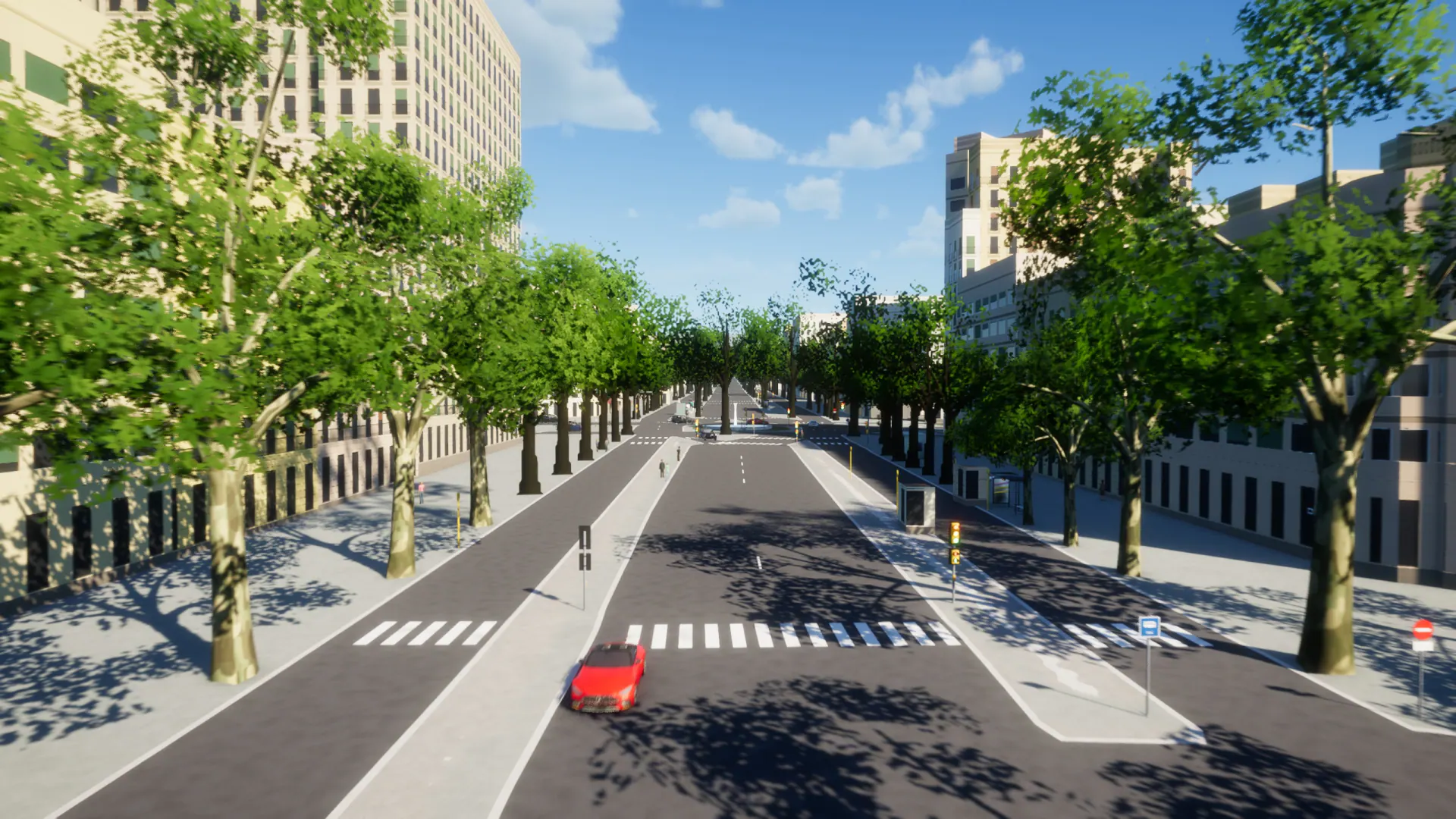
Every view on this page is a frame of the world itself, rendered in real time.
Shop by shop, as OpenStreetMap lists the Passeig de Gràcia today.
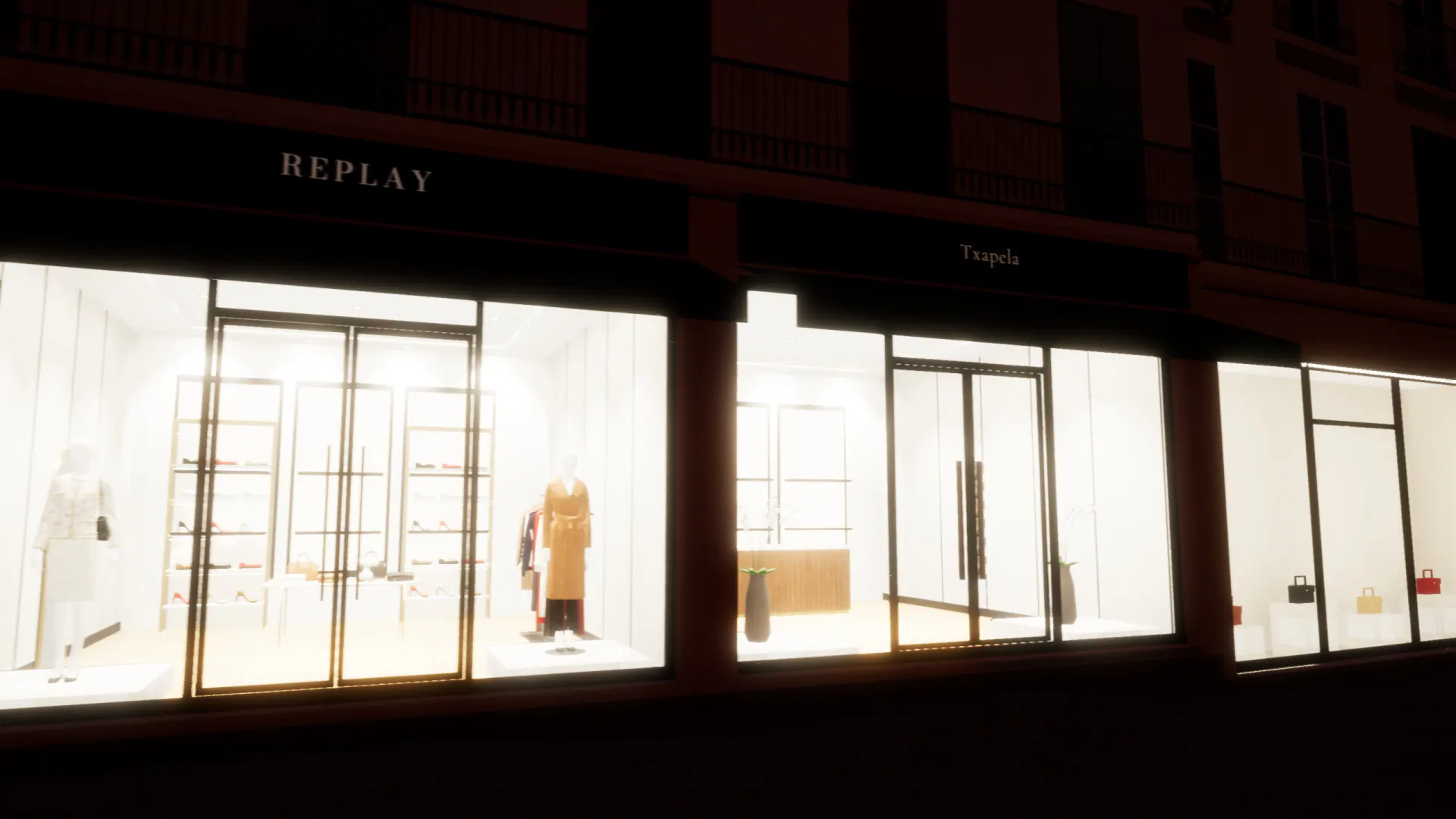
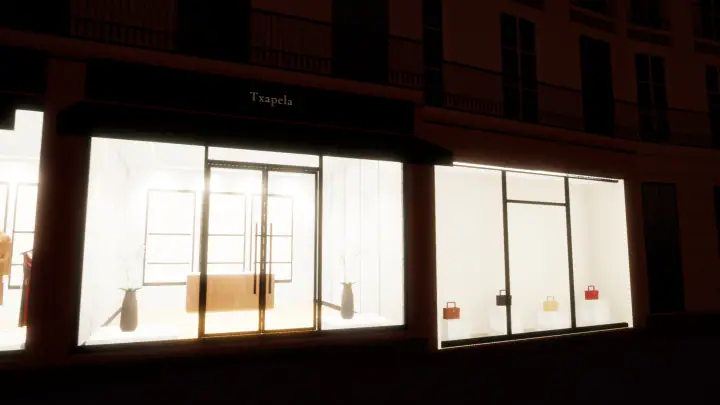
At dusk the flagships light up along the Passeig: Chanel, Louis Vuitton, Cartier, Loewe, each under its real name.
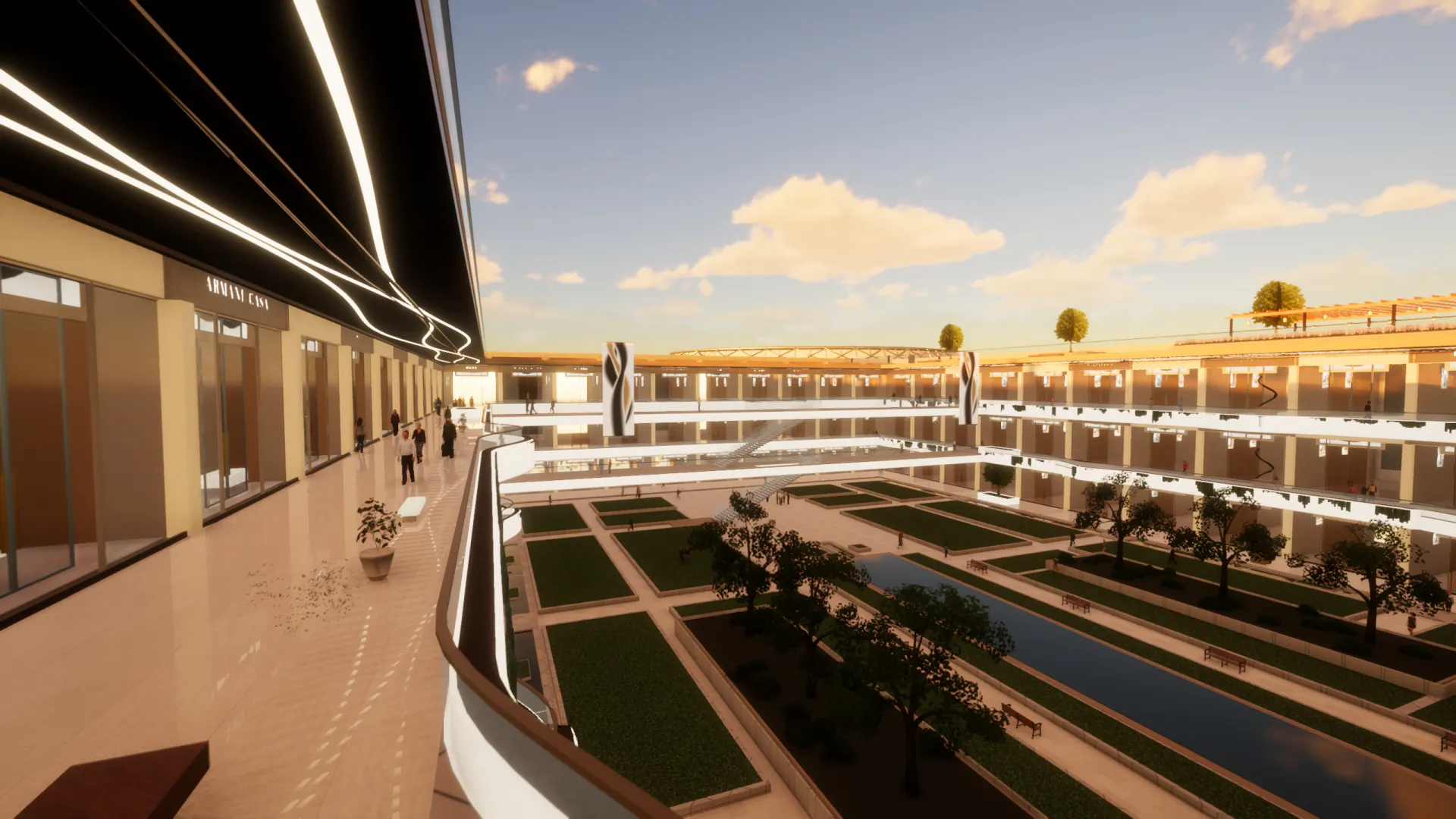
The shopping hall of the stadium district: boutiques on every side of a plaza, a step from the Camp Nou.
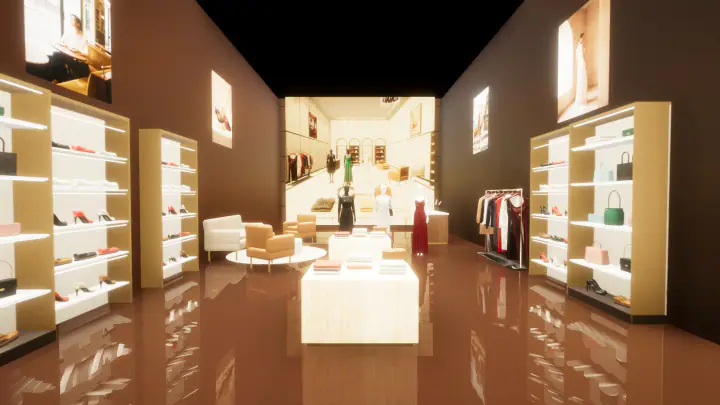
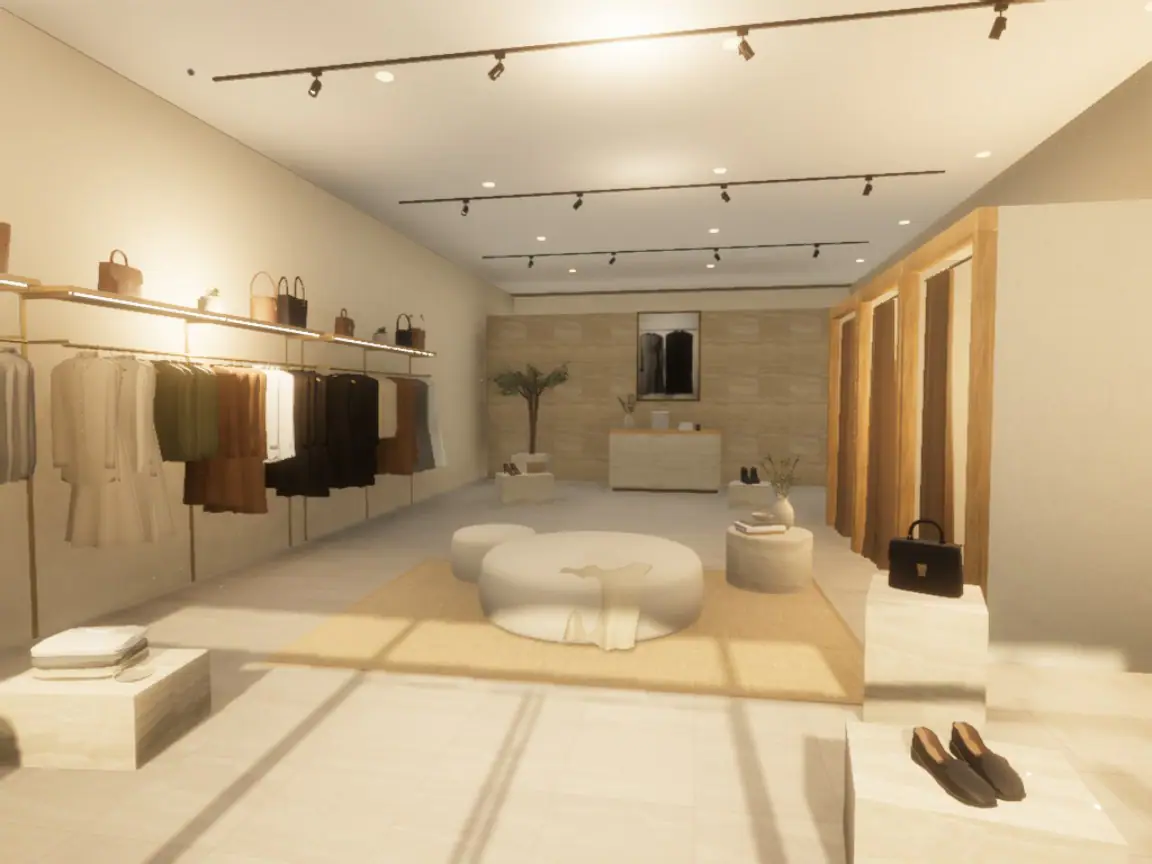
Furnished to the last shelf: the oak blocks, the lit walls, the pieces on display.
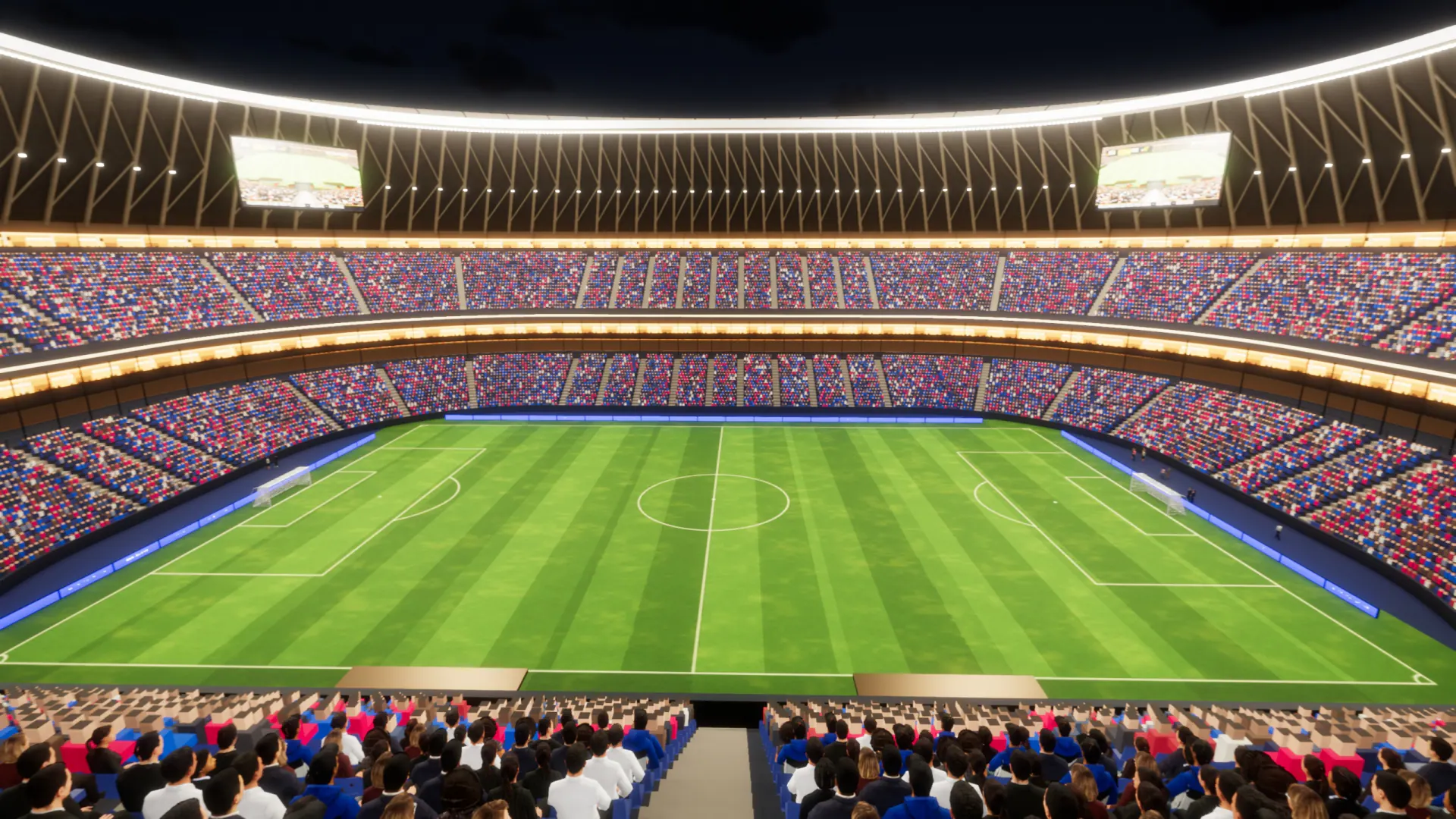
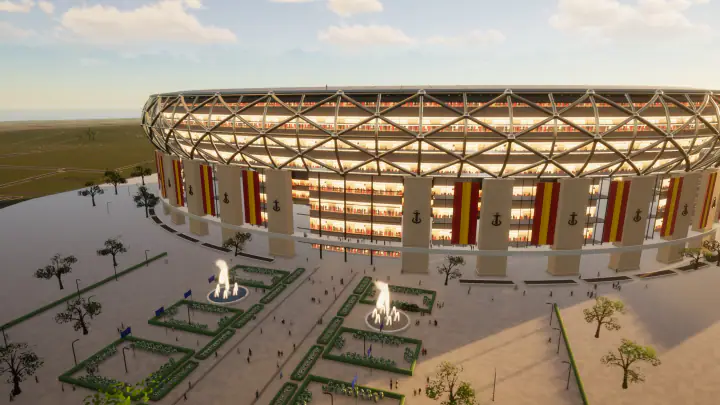
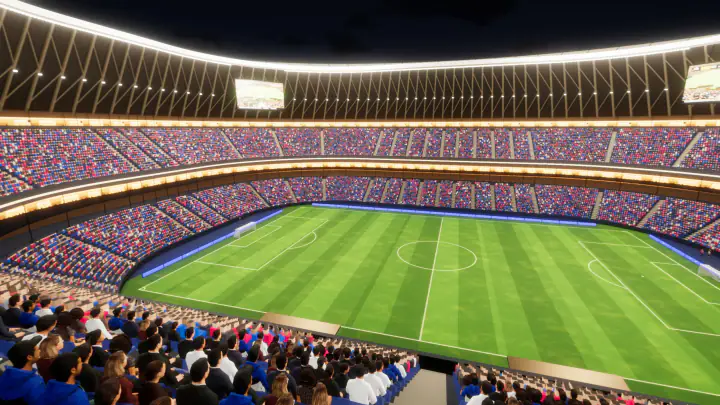
Where the real stadium stands. FC Barcelona’s ground opened on 24 September 1957 and is being rebuilt for 105,000. In META PULS, a seat for every ticket.
The full house, the match on the pitch: every seat can be sat in, every ticket takes you to yours.
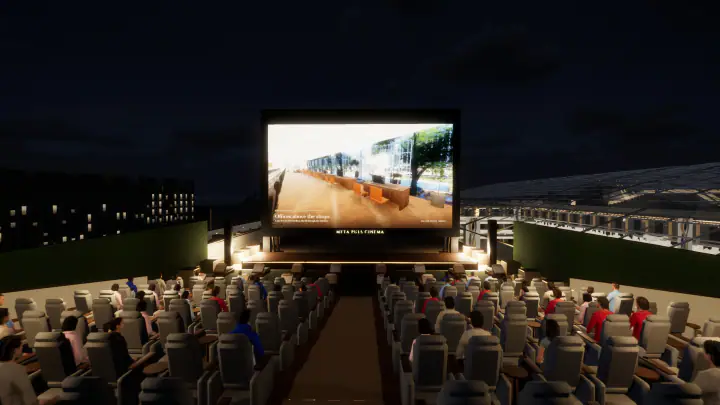
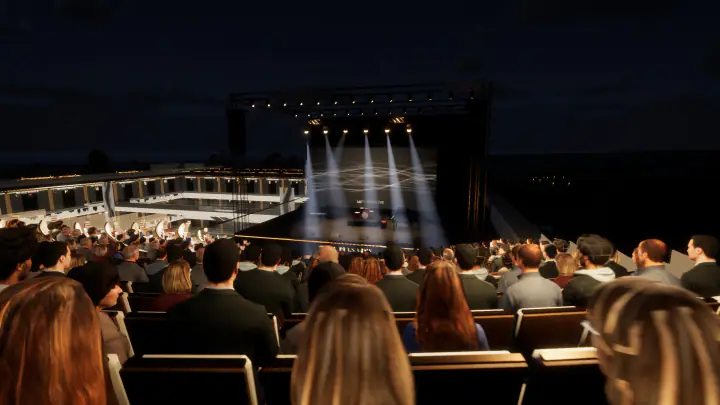
Go to the arena →On the roof of the stadium district, a cinema and a concert hall. A seat for every ticket, the film on the screen, the show on the LED wall.
The concert hall on the roof: the curved rows, the stage, the light.
Low sun down the Passeig. The stone waves of La Pedrera turn gold, the mosaic of Casa Batlló glitters.
Then the lamps, the shop windows and the lit façades. The same Passeig, open all night.
Every figure comes from the world’s own data: what is drawn, where it stands.
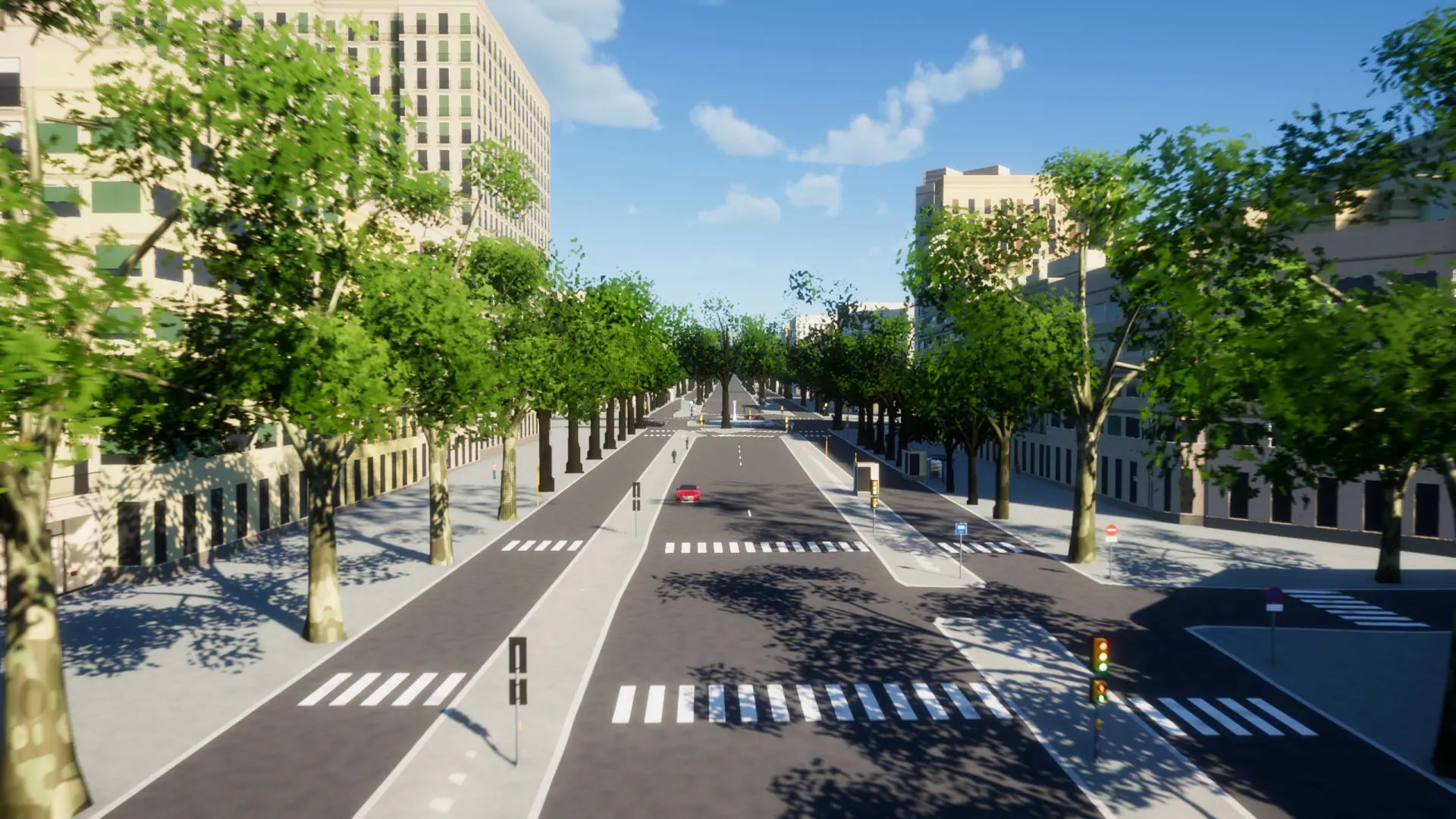
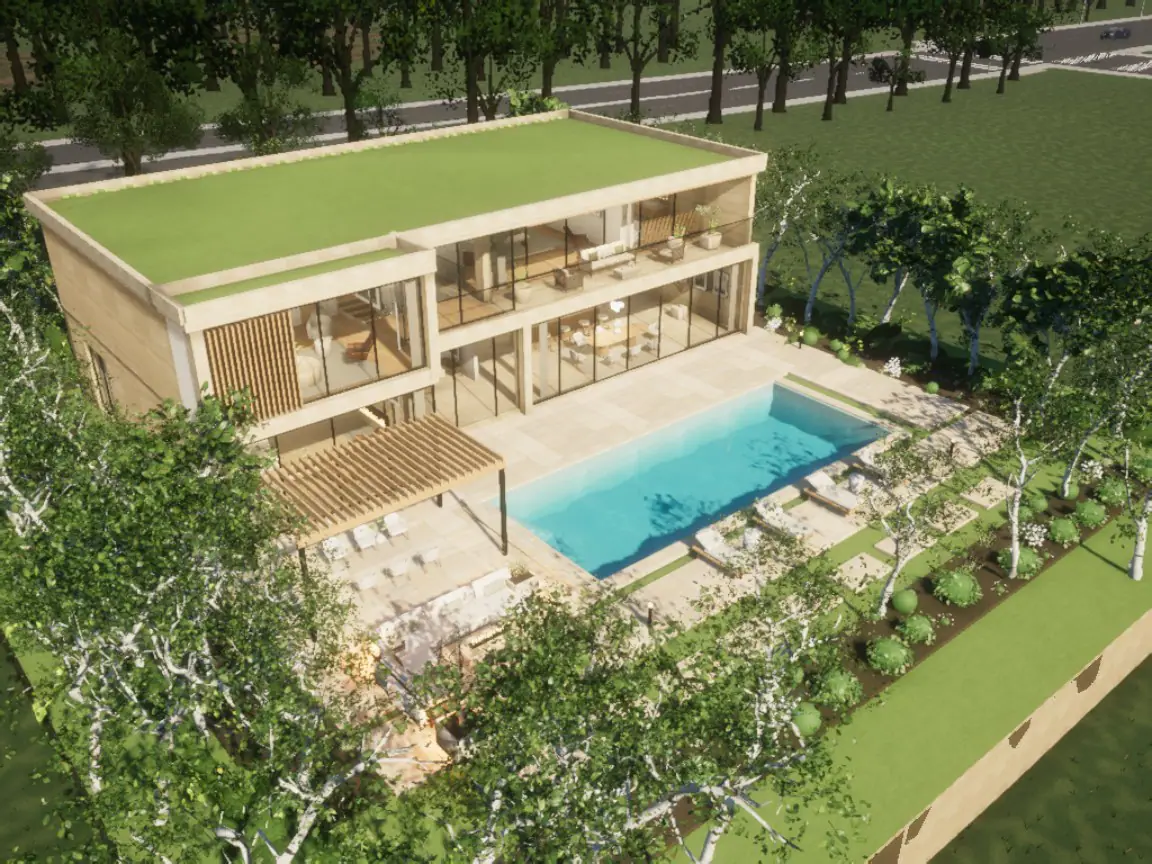
Around the main streets, the city is open land on the real cadastre. Buy a lot, place Villa Linden or the Kontor Hof on it, and walk through every room in the browser.
See the lots for sale →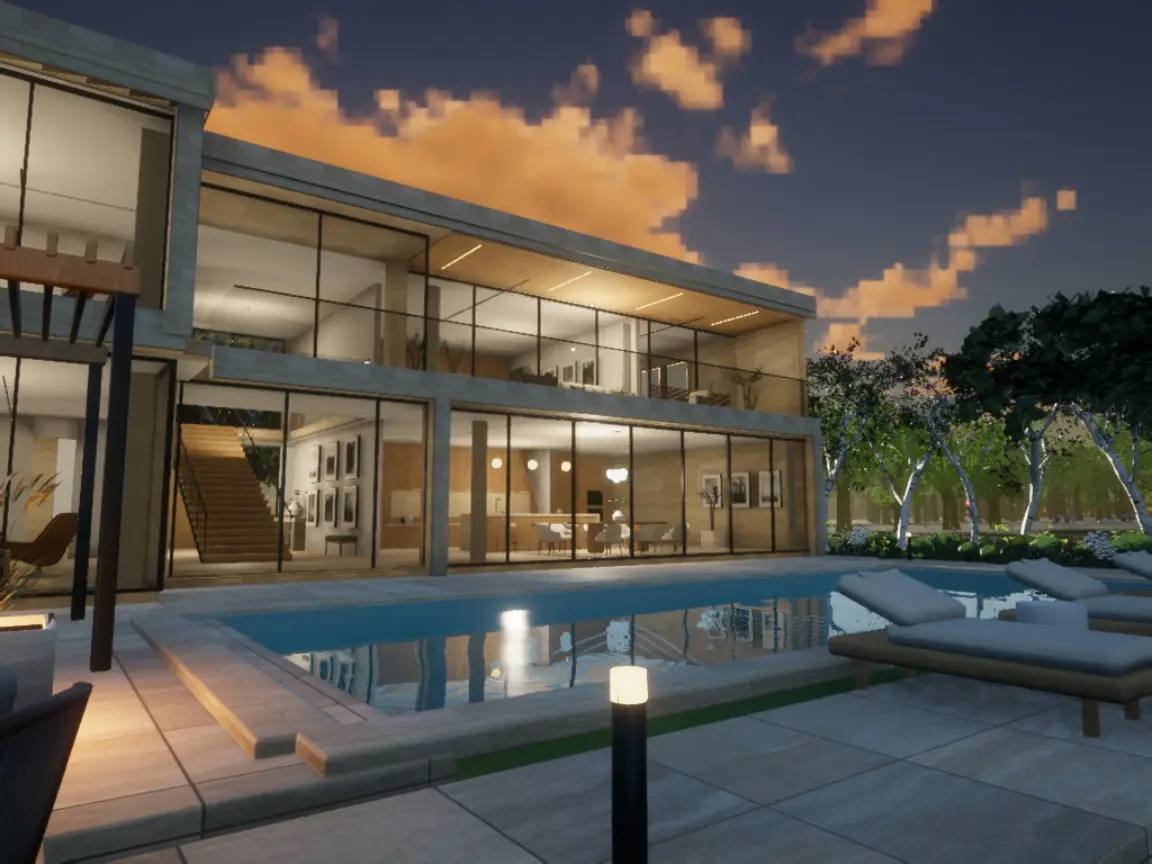
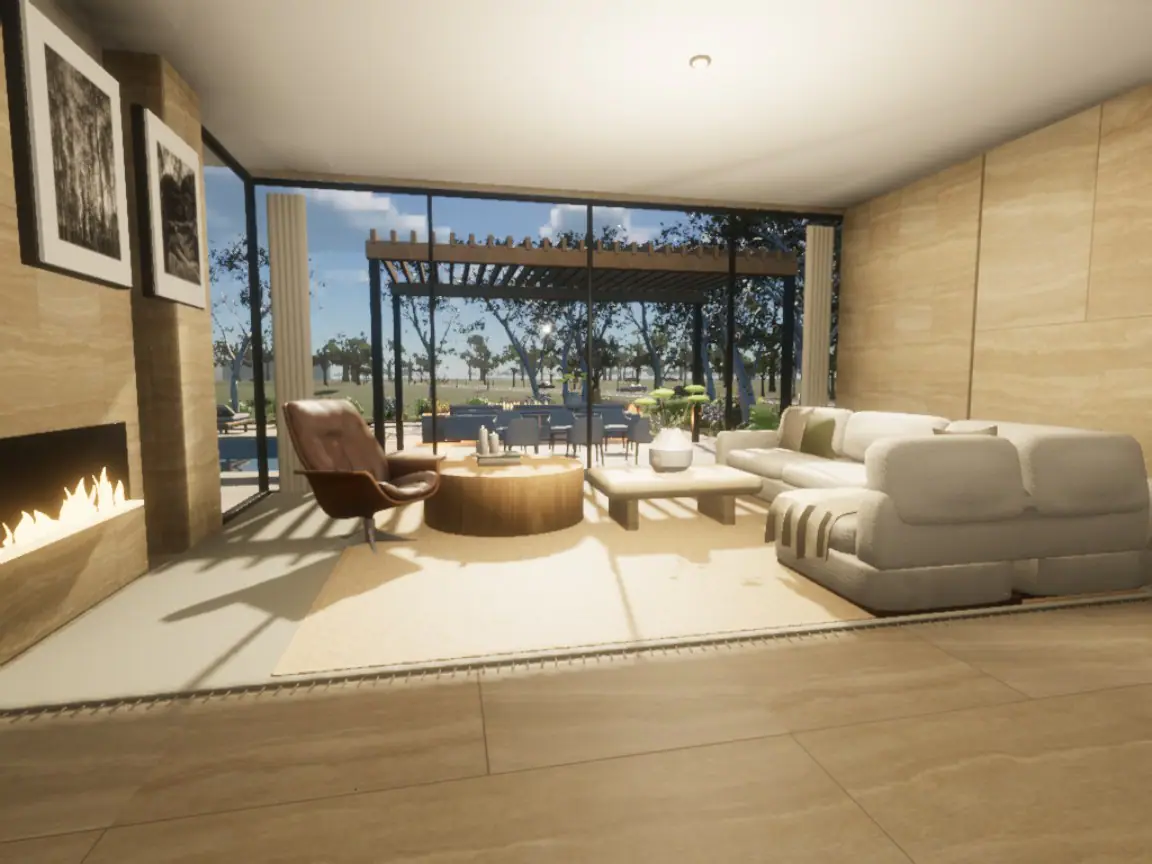
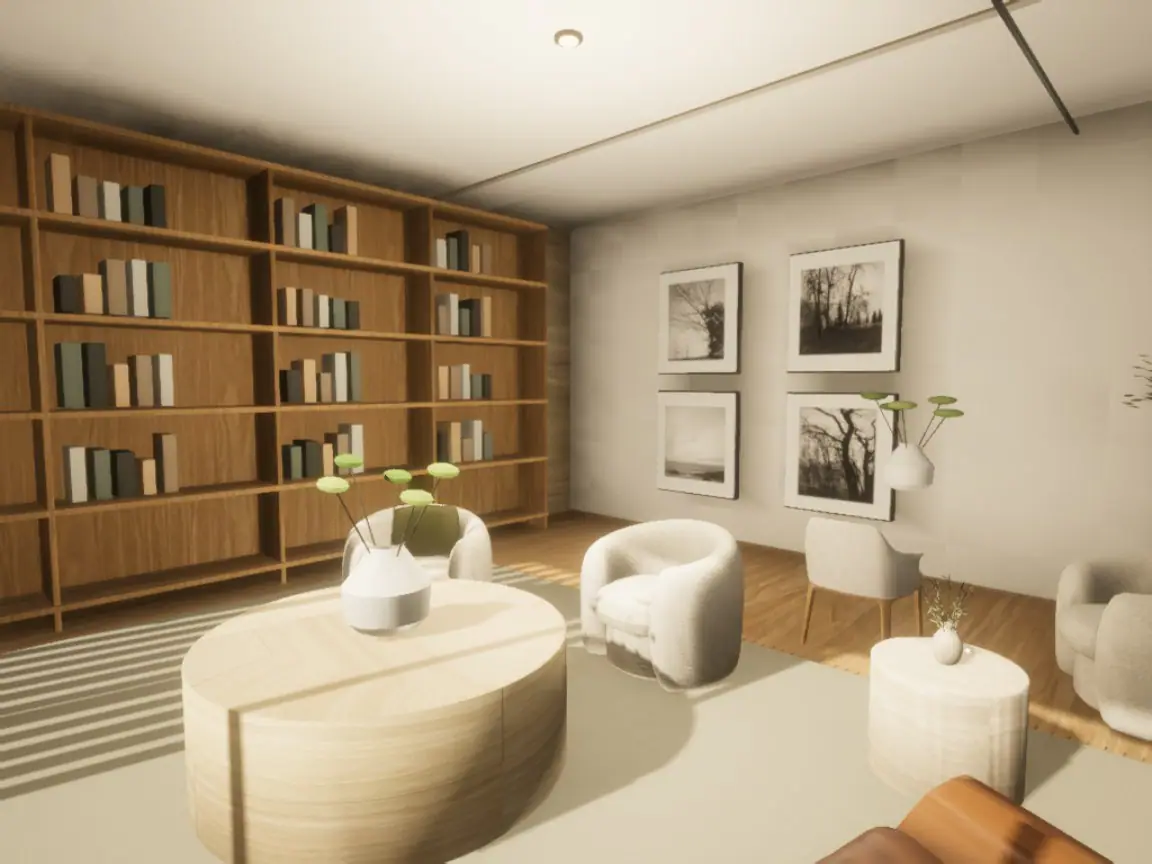
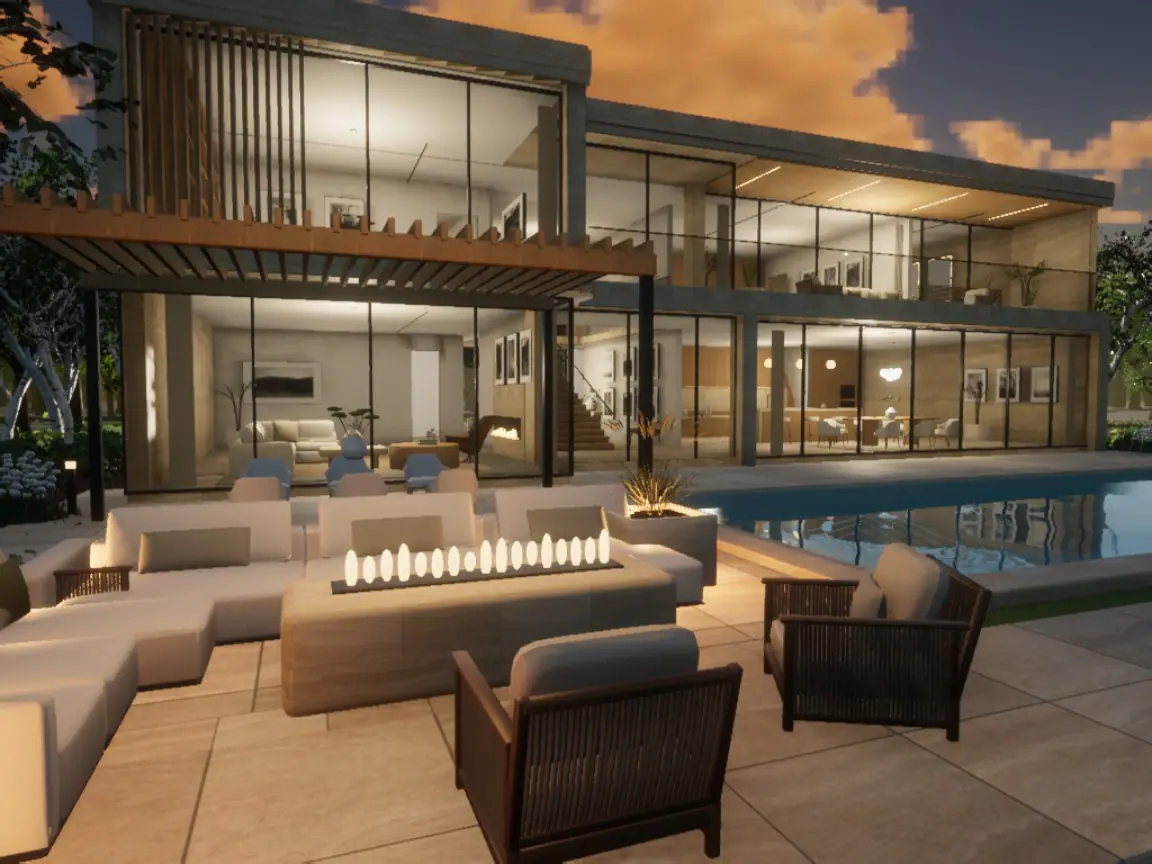
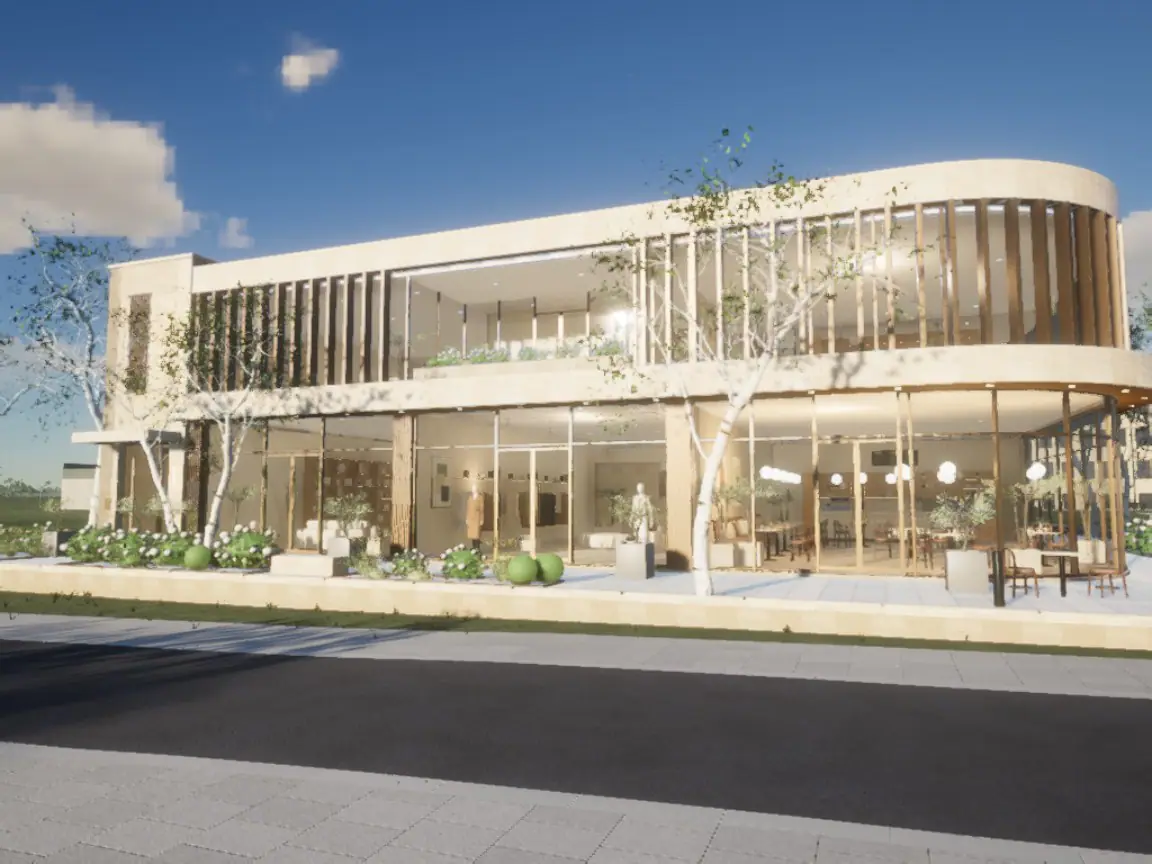
The 3D world runs in a current Chrome, Edge or Safari (WebGPU). This page runs everywhere.