Brandenburger Tor
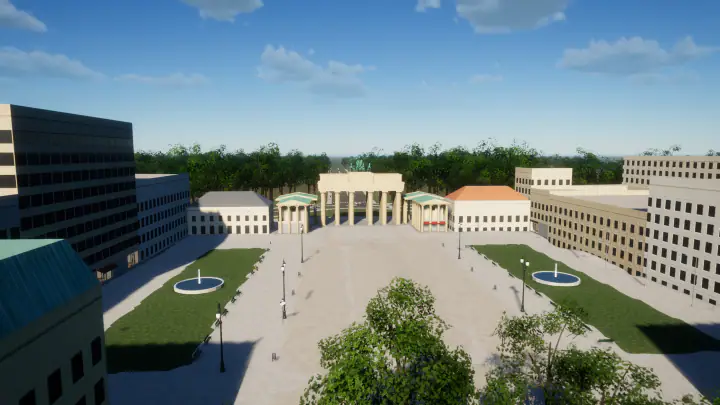
Pariser Platz
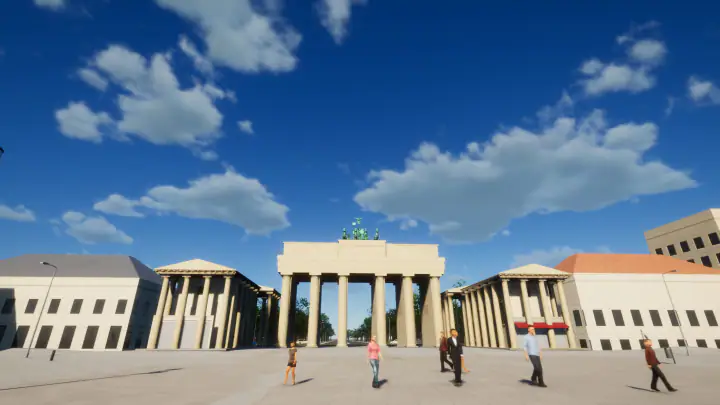
Carl Gotthard Langhans built it as the gate of the city on the road west. Twelve fluted Doric columns, six on each side, frame its five passages.
- Architect
- Langhans
- Columns
- 12
- Passages
- 5
Unter den Linden. Rebuilt to the metre.
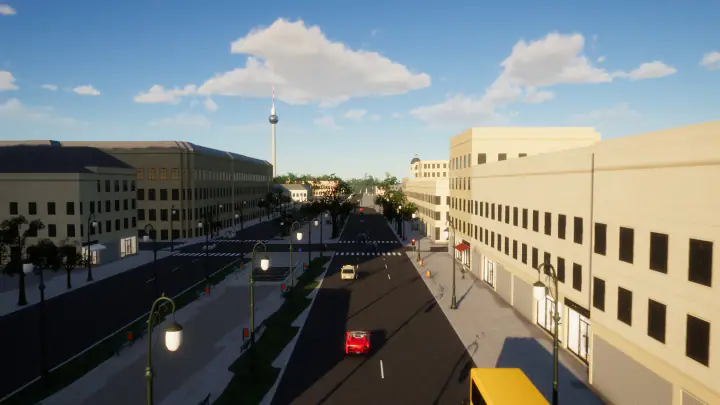
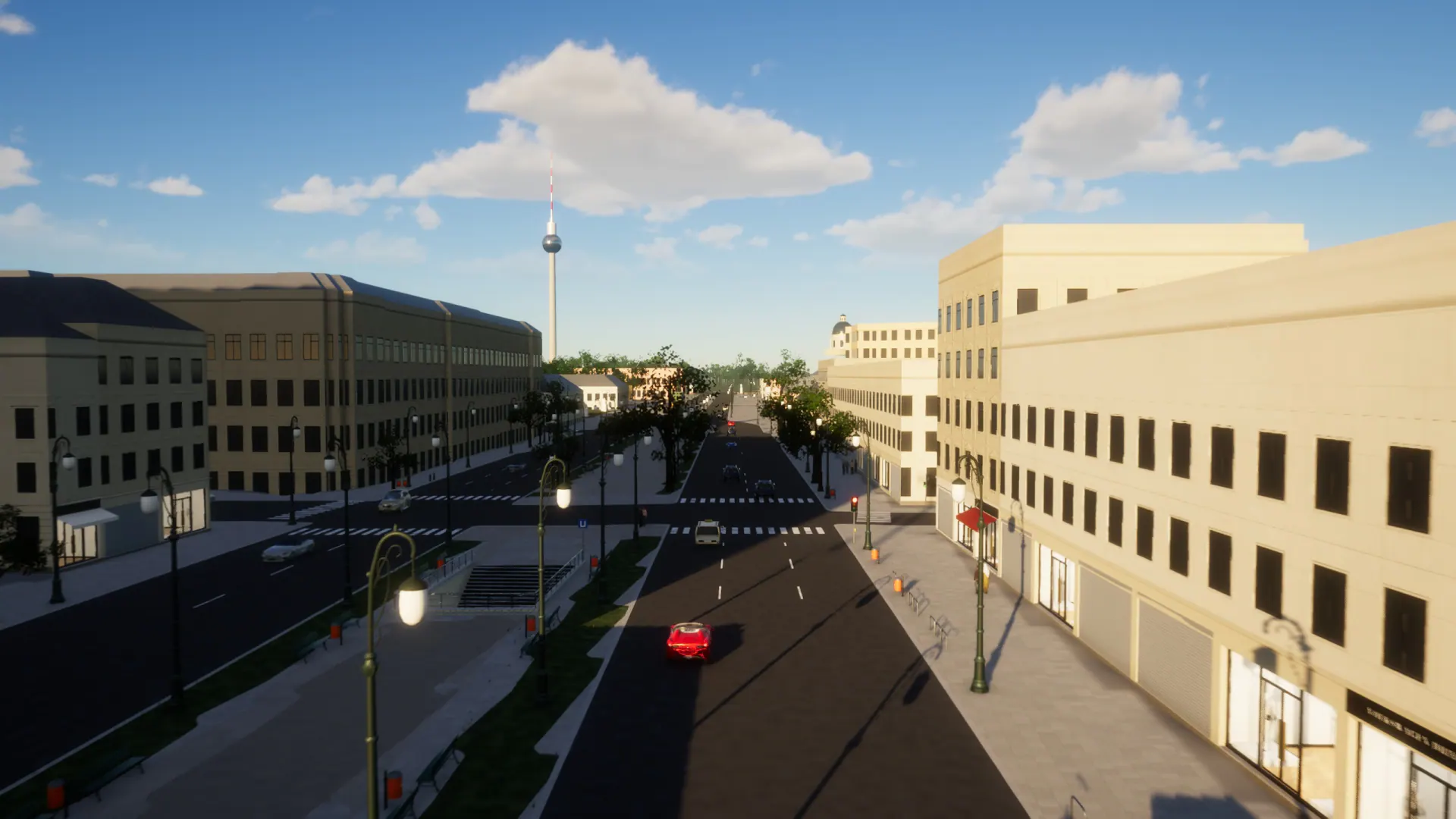
Evening over the centre. Unter den Linden runs east from the Brandenburger Tor to the Schloss, with the Fernsehturm on the horizon.
This is not a picture of Berlin. It is Berlin, built on the real map: every street where OpenStreetMap draws it, every height from the survey, every lime tree where it grows, every shop under its own name. Walk it, buy a lot beside it, build on it.
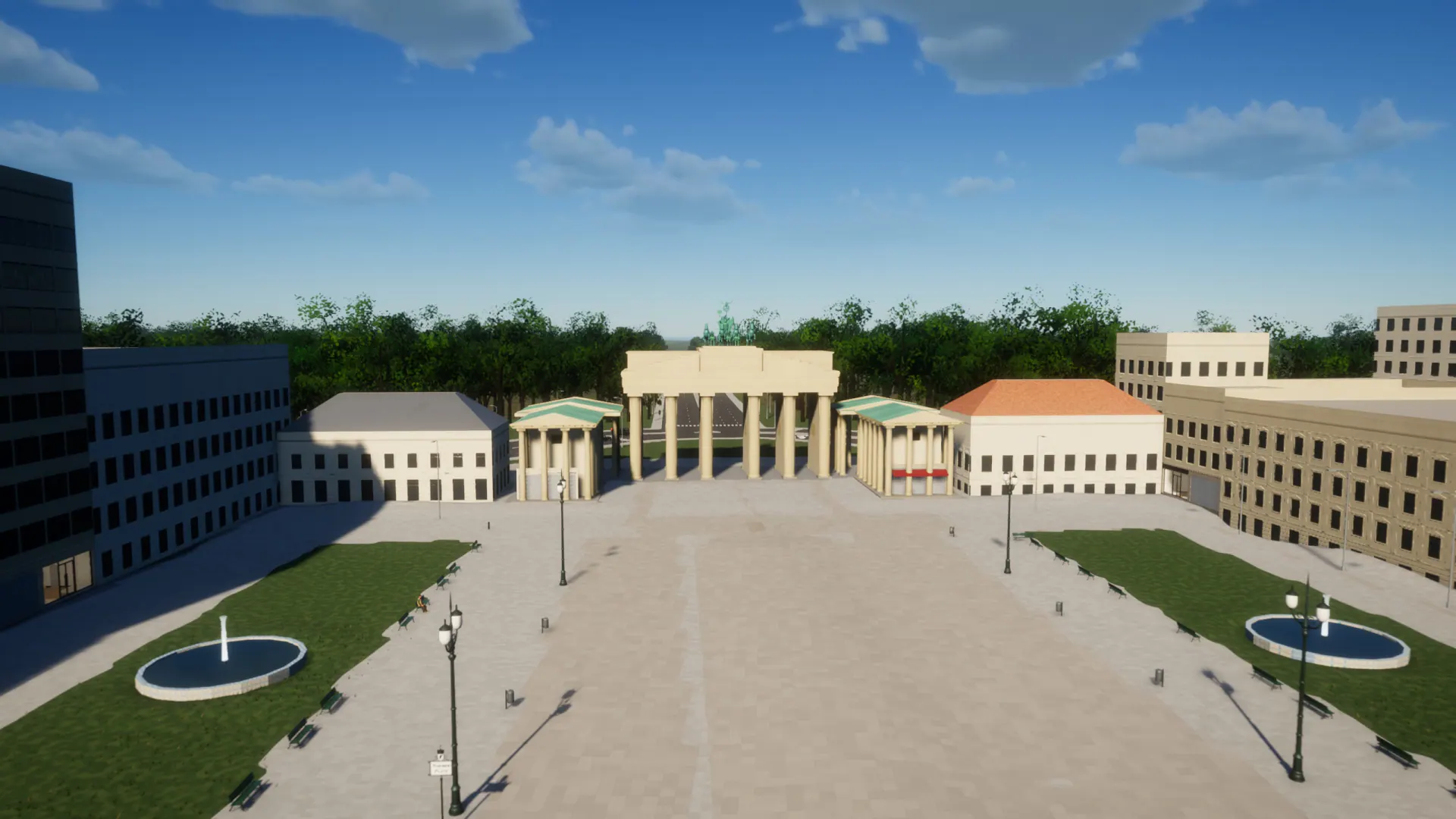
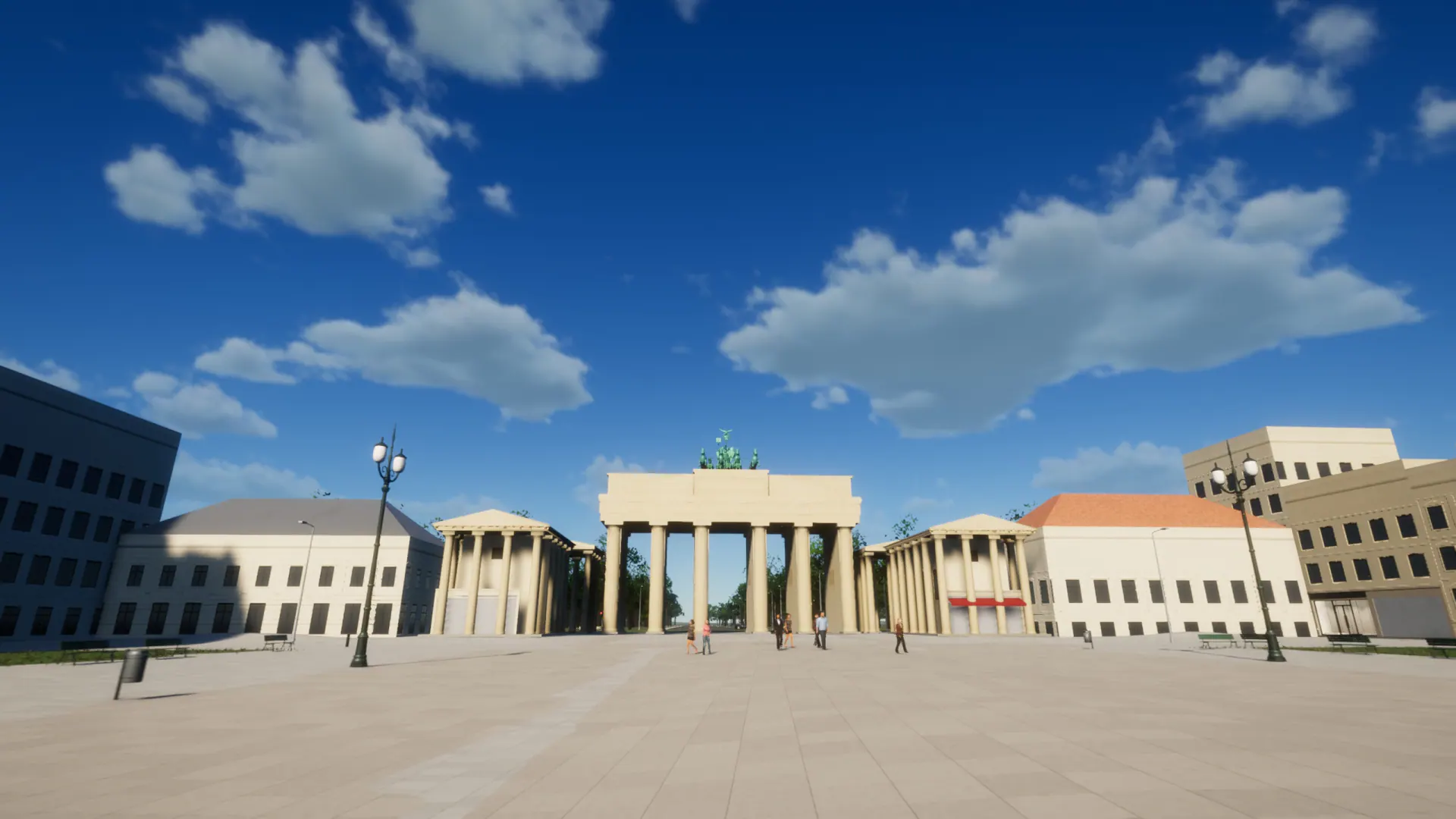
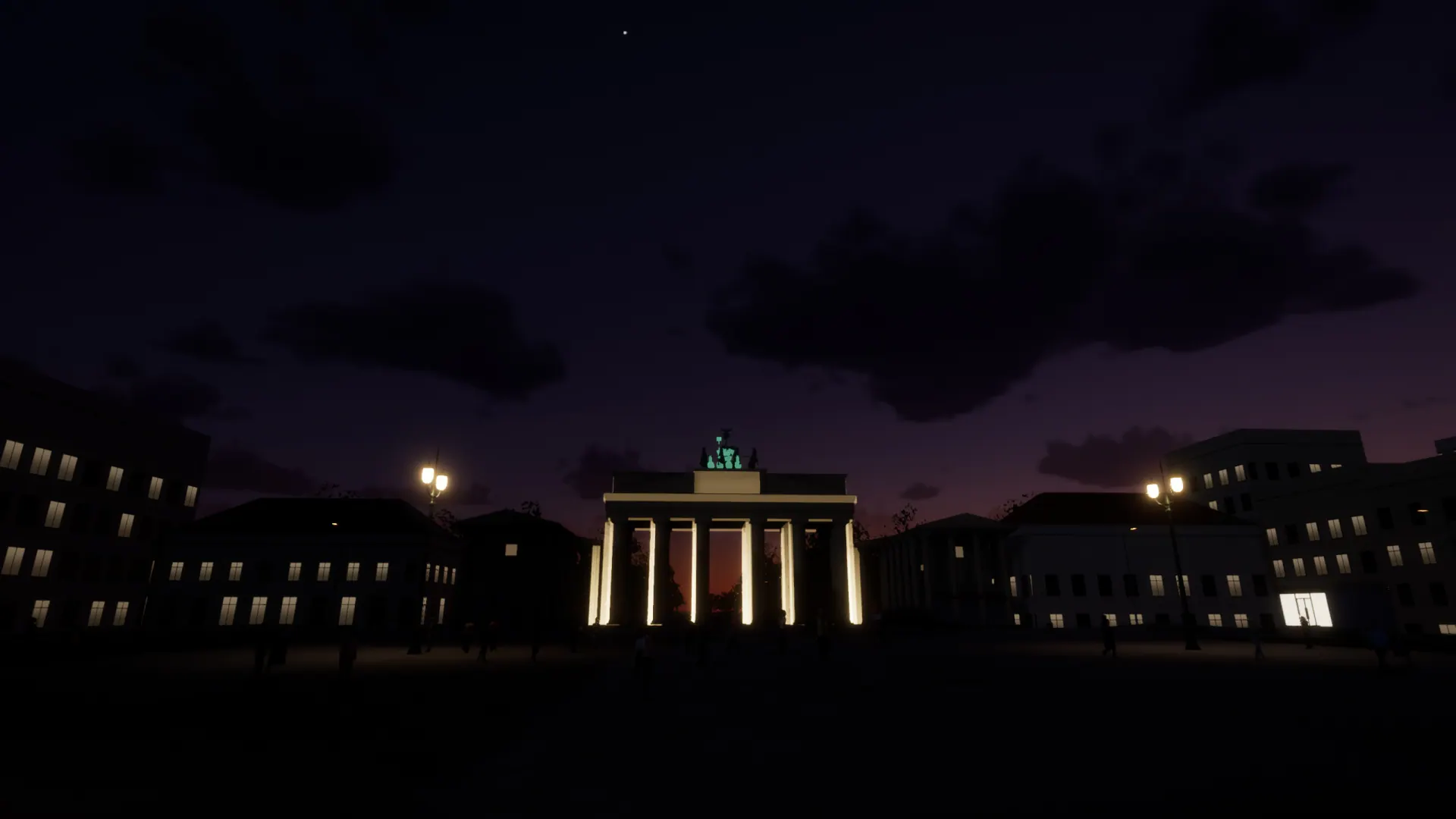
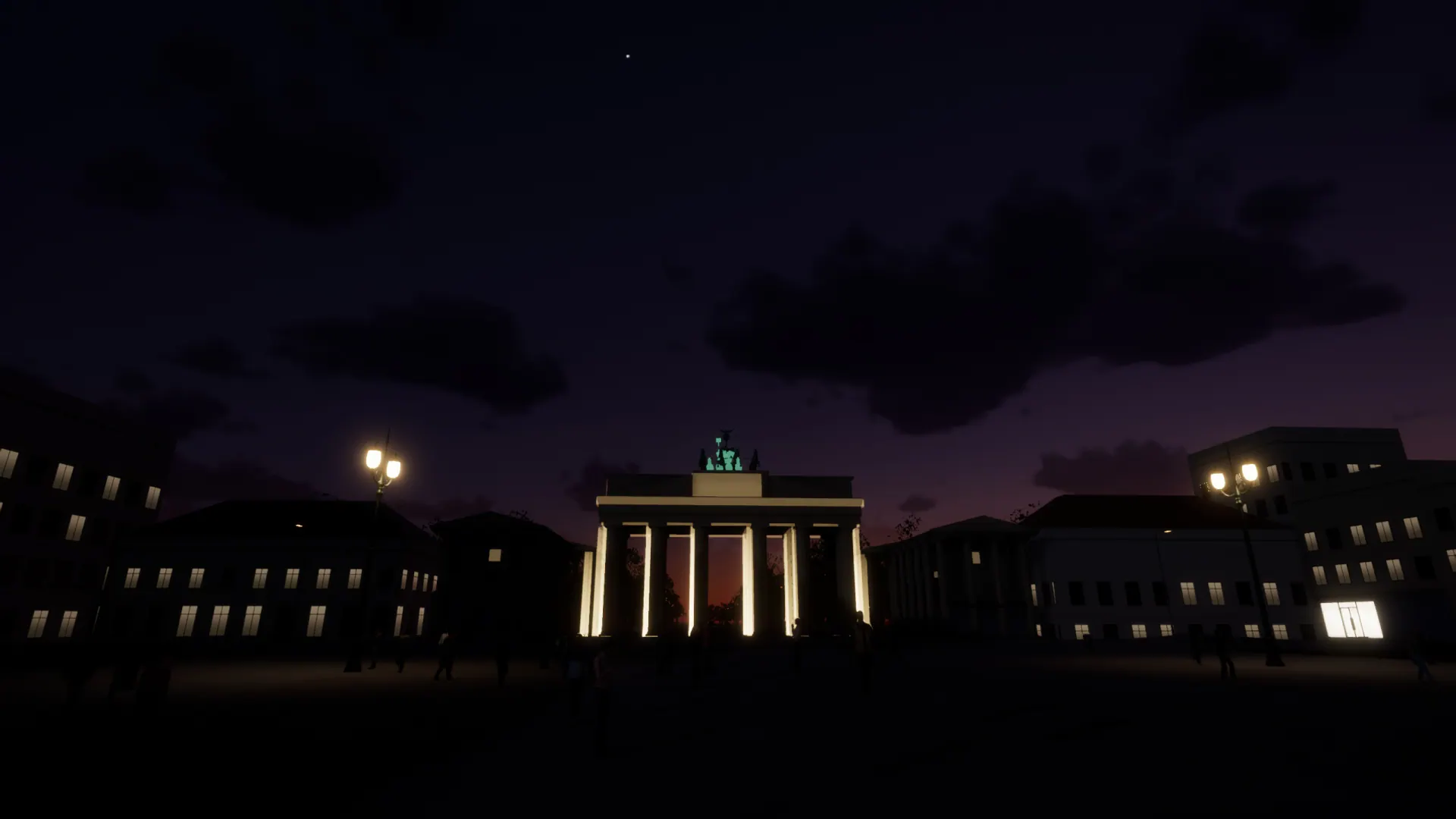
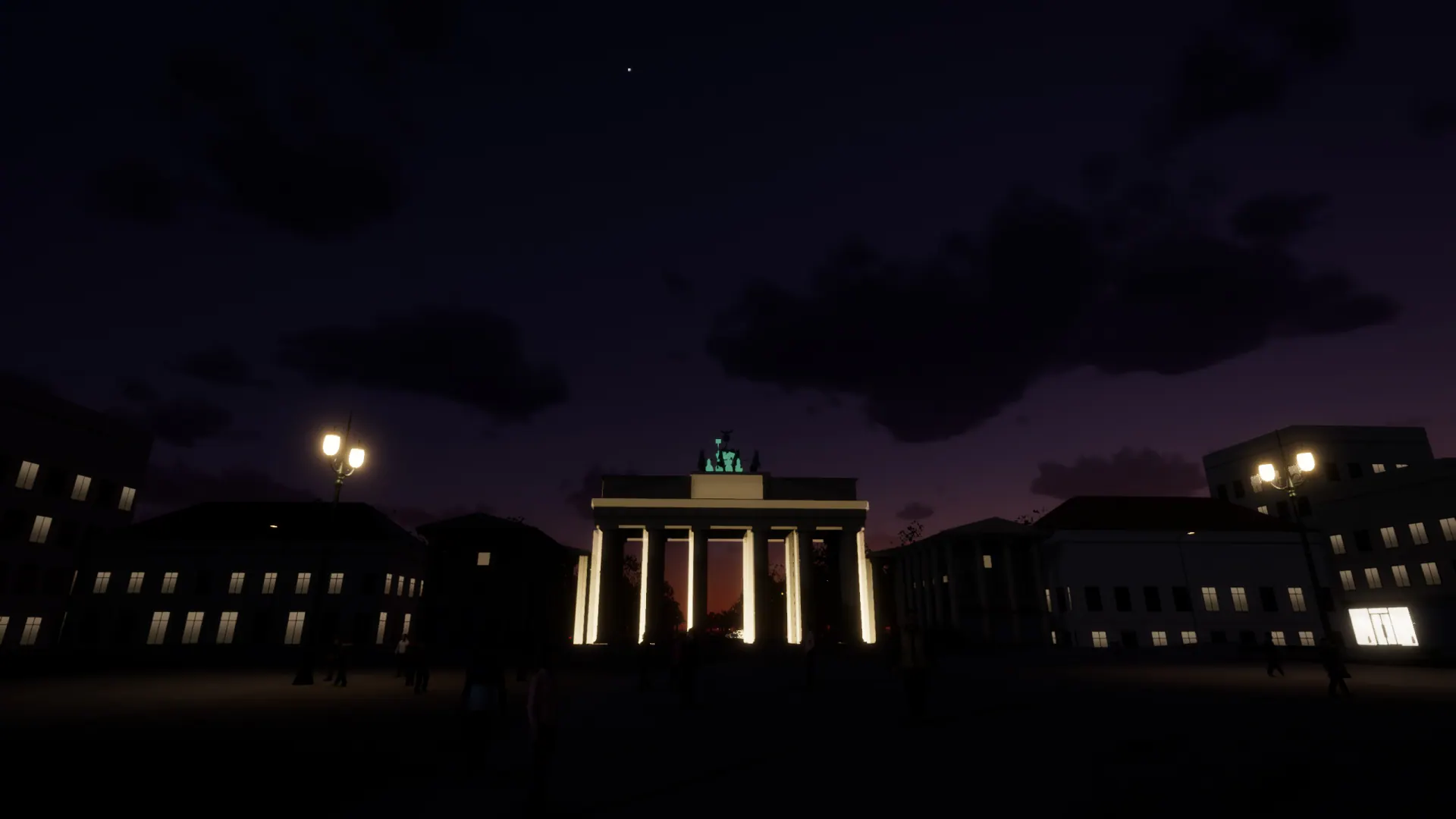
Langhans’s gate of 1791: twelve Doric columns, five passages. Above it, Schadow’s Quadriga of 1793, taken to Paris by Napoleon in 1806 and brought home in 1814.
Scroll to turn them · drag to look around
Pariser Platz
Carl Gotthard Langhans built it as the gate of the city on the road west. Twelve fluted Doric columns, six on each side, frame its five passages.
On the Brandenburger Tor
Victoria in a chariot drawn by four horses, by Johann Gottfried Schadow. Napoleon took it to Paris in 1806; it came home in 1814. Today’s copper group was recreated from a plaster cast of 1942.
On every street
Light ivory, as German law has prescribed for taxis since 1971, with the yellow TAXI sign on the roof.
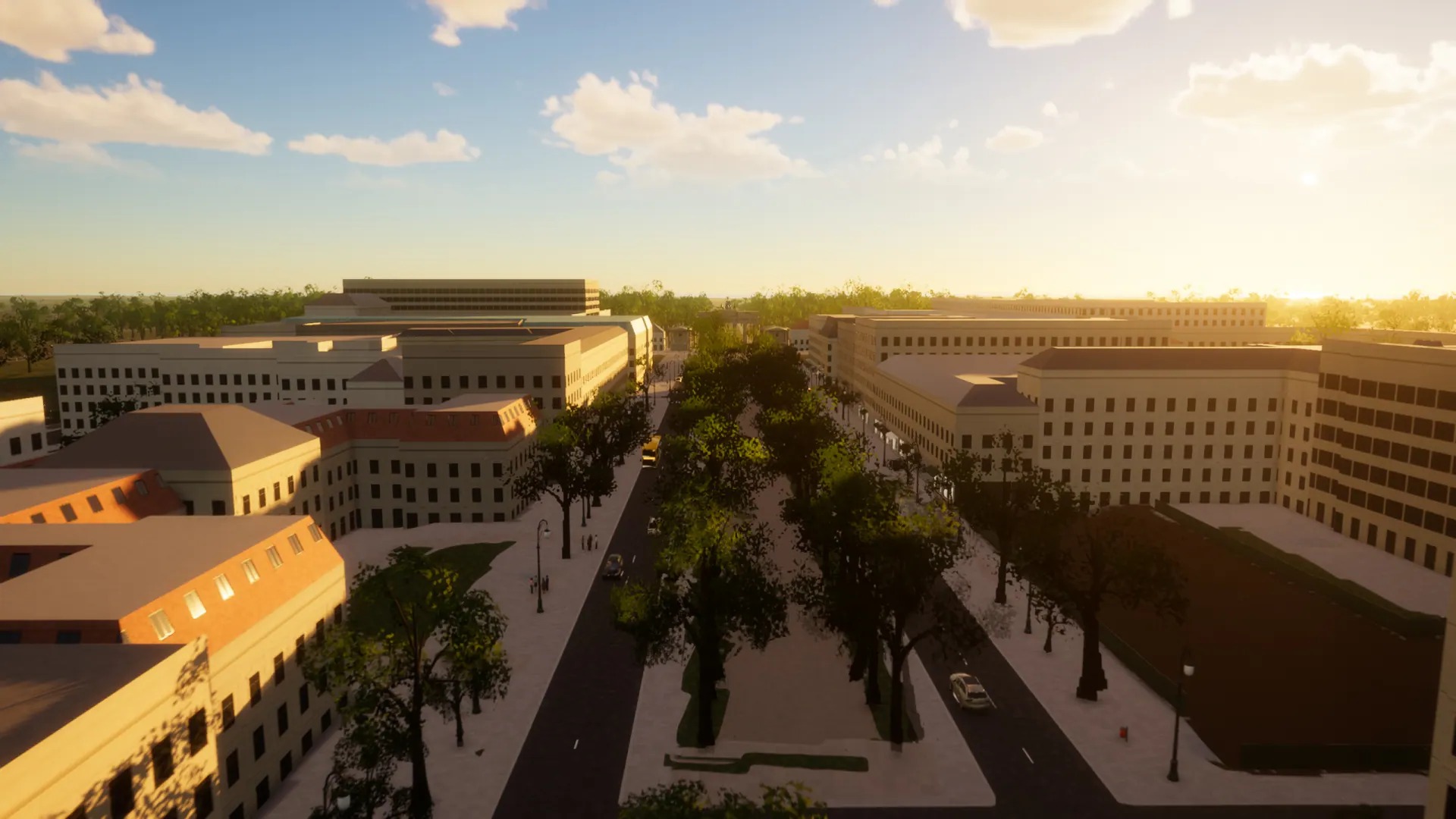
1.5 km. 60 m wide. 43 shops. One boulevard.
Sixty metres wide and nearly one and a half kilometres long: the lime trees, the lamps and the promenade between the carriageways, from Pariser Platz to the Schlossbrücke.
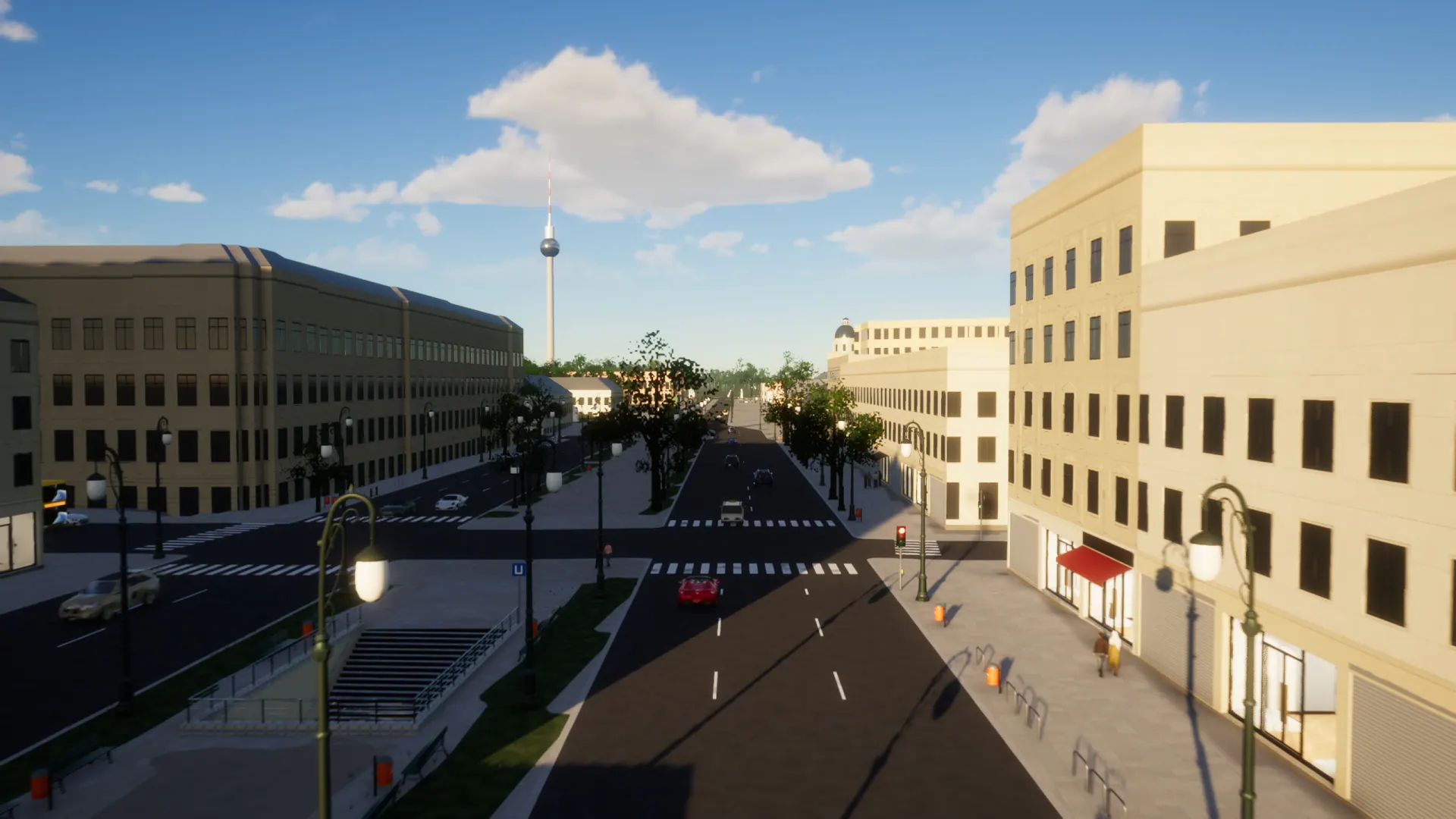
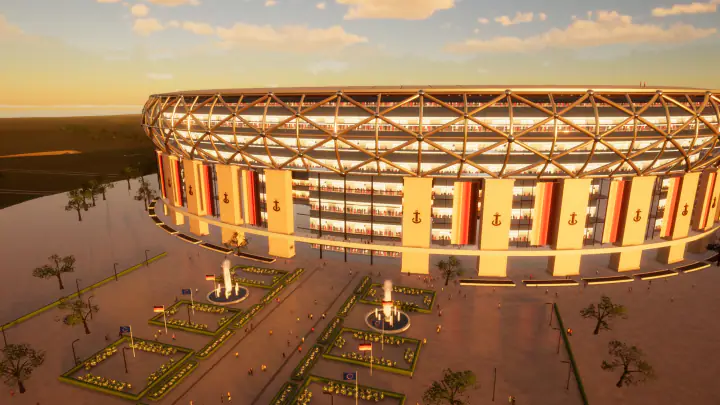
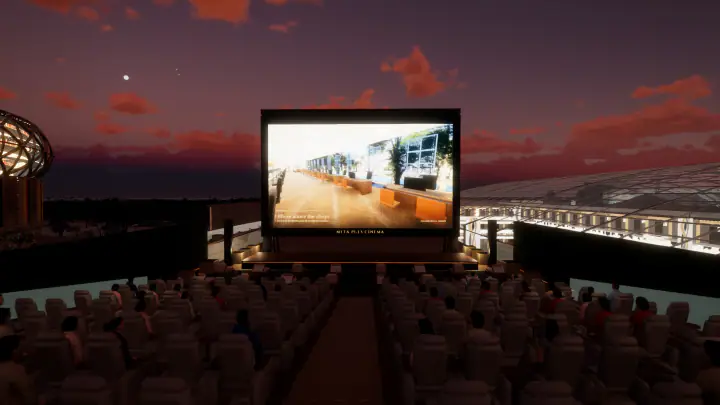
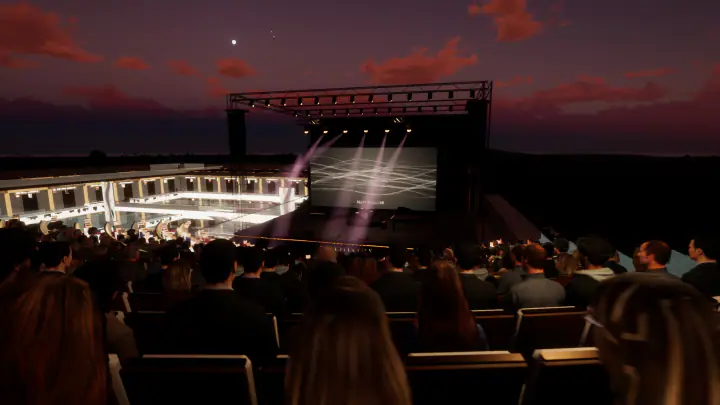
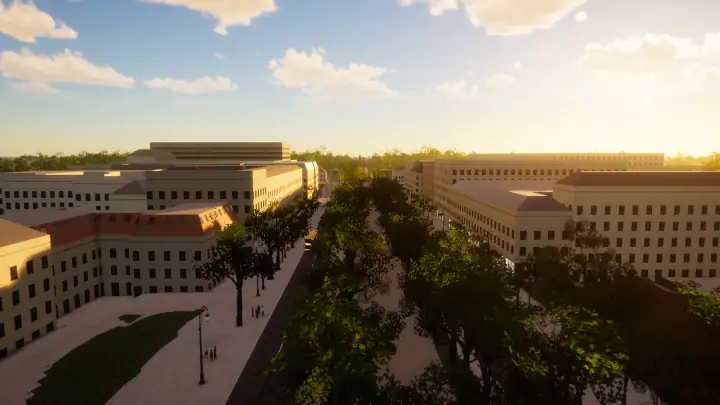
Every view on this page is a frame of the world itself, rendered in real time.
Shop by shop, as OpenStreetMap lists Unter den Linden today.
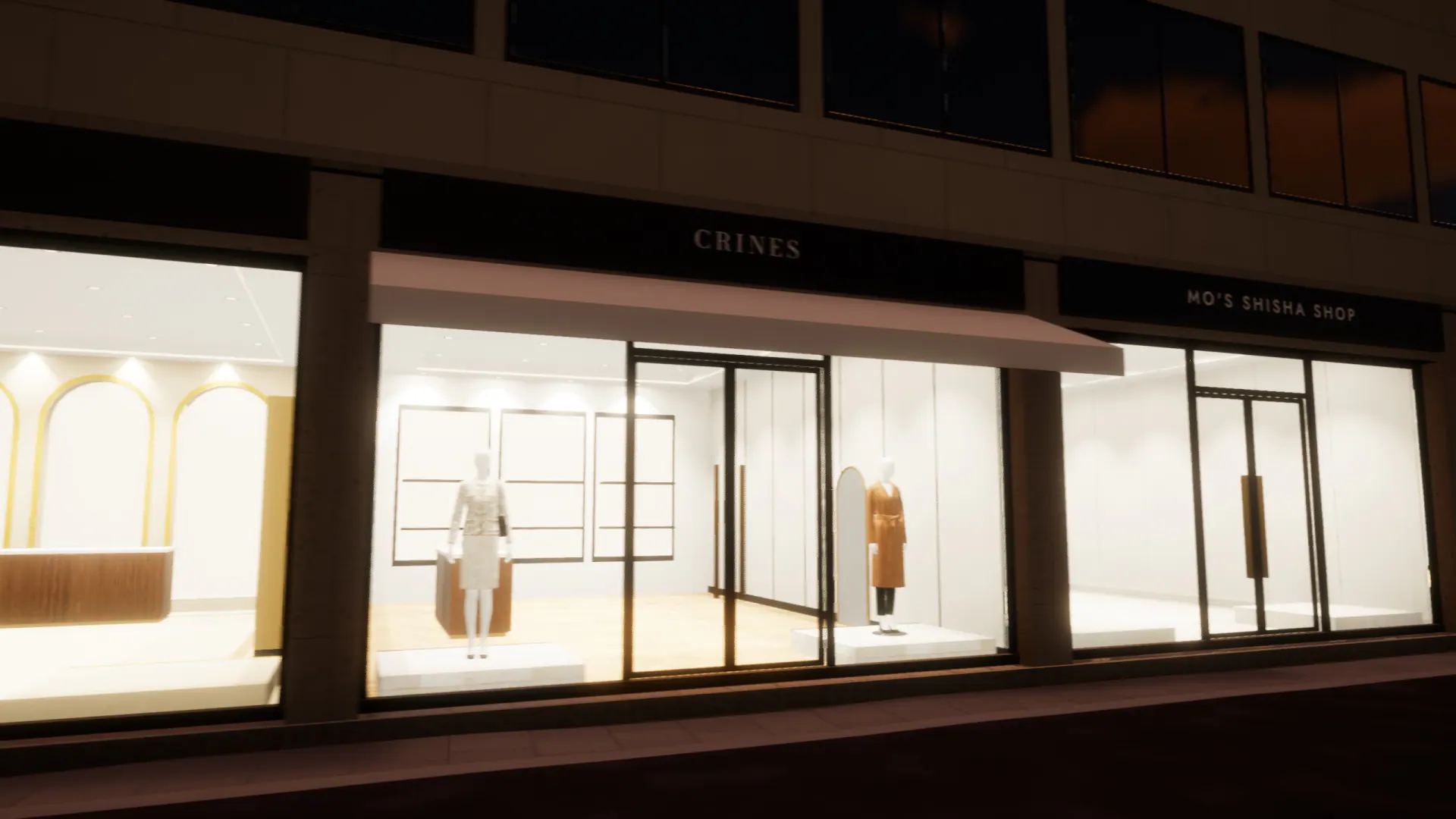
At dusk the windows light up along the boulevard: Berlin’s own Ampelmann, the Nivea Haus, Miele, Volkswagen, each under its real name.
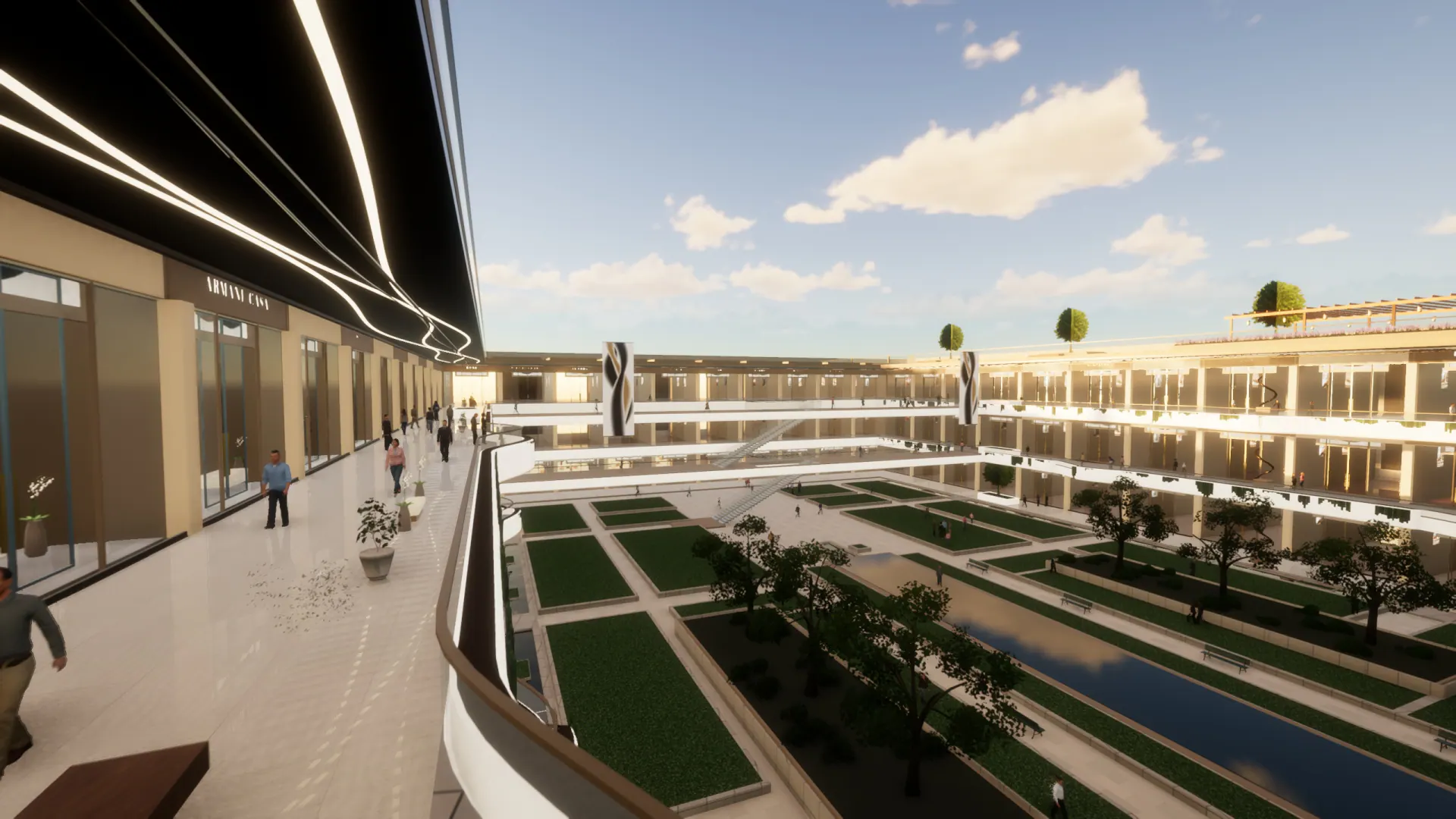
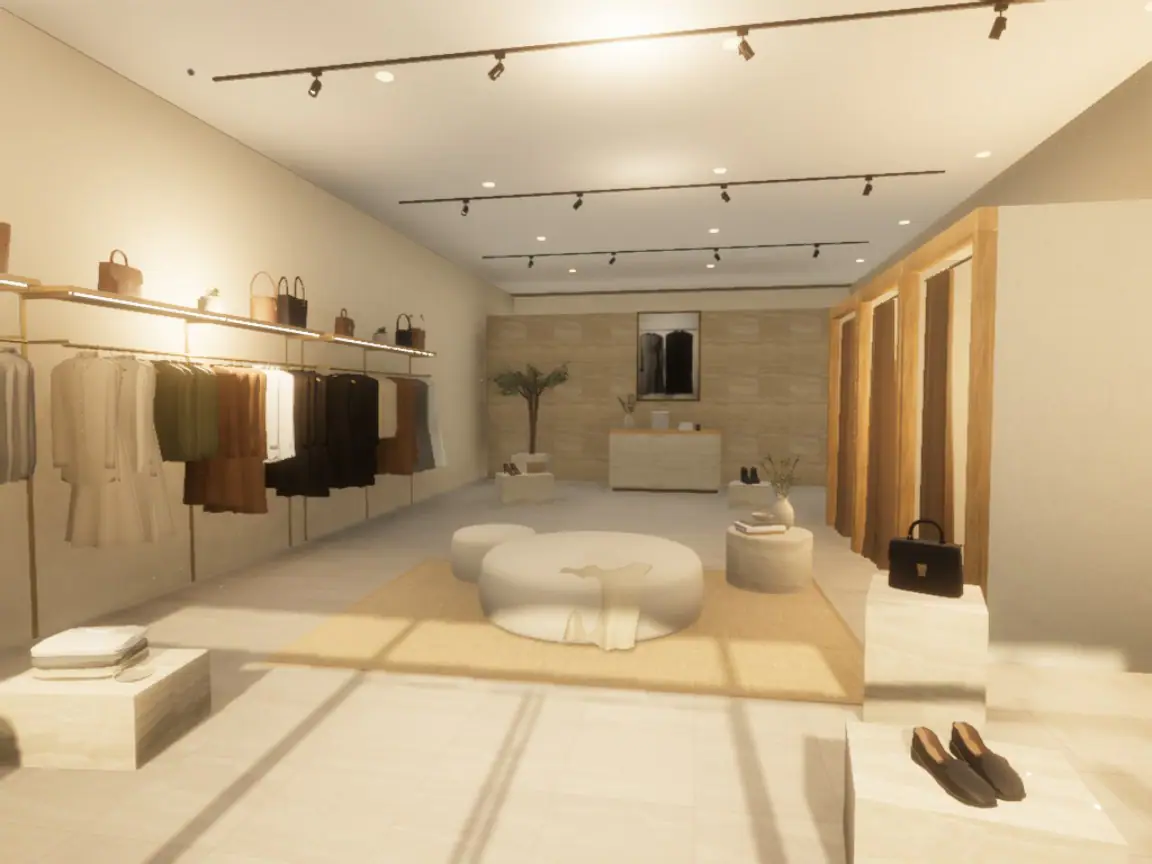
The shopping hall of the stadium district: boutiques on every side of a plaza, a step from the Olympiastadion.
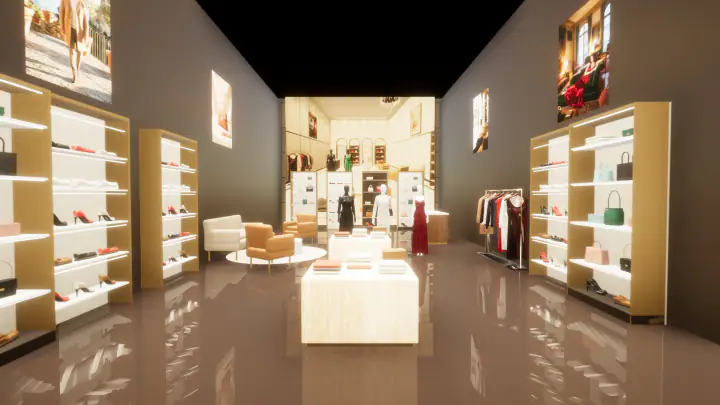
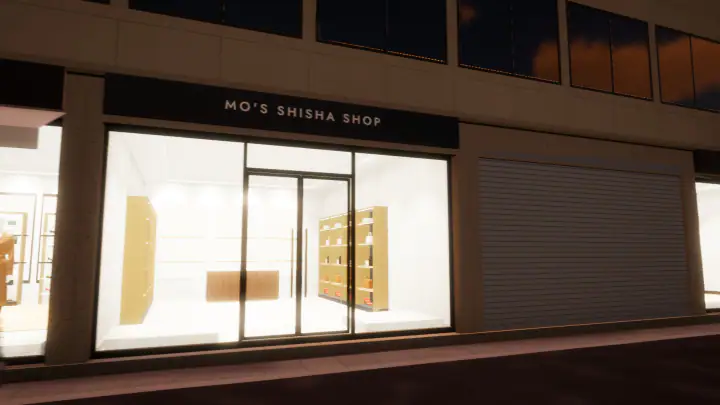
Furnished to the last shelf: the oak blocks, the lit walls, the pieces on display.
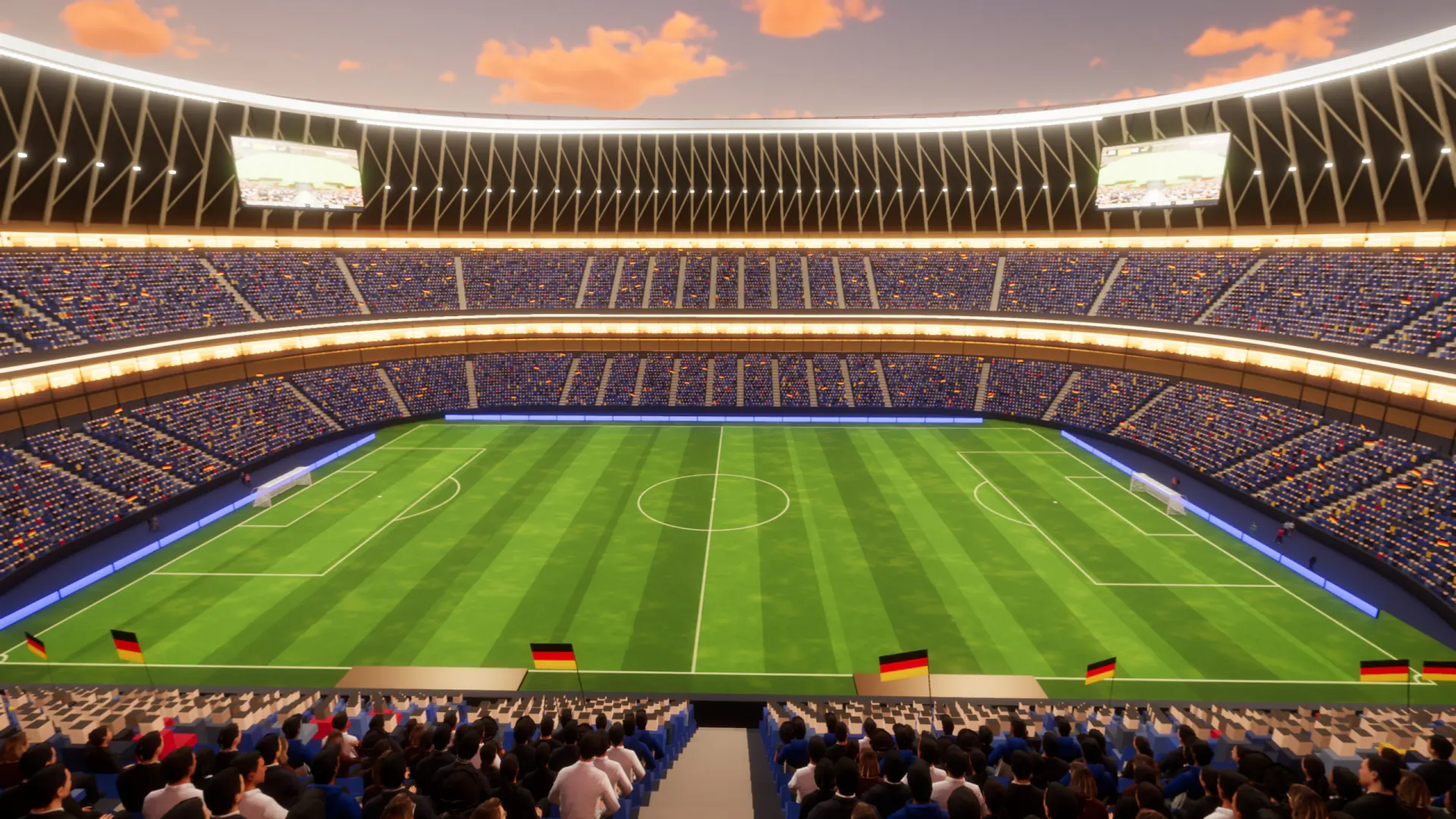
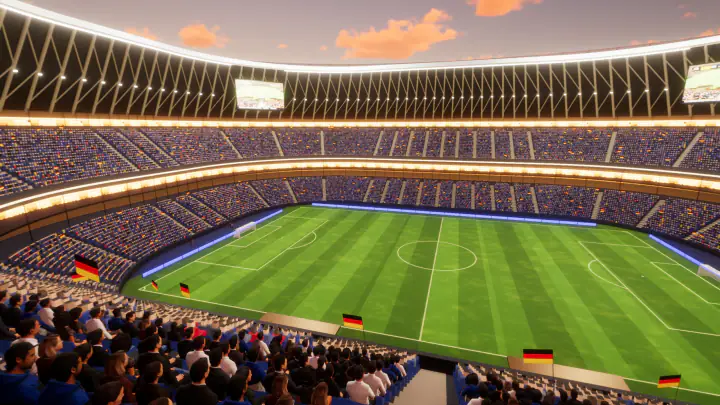
Where the real stadium stands. Werner March’s bowl opened in 1936, hosted the World Cup final of 2006 and seats 74,475 today. In META PULS, a seat for every ticket.
The full house, the match on the pitch: every seat can be sat in, every ticket takes you to yours.
Go to the arena →On the roof of the stadium district, a cinema and a concert hall. A seat for every ticket, the film on the screen, the show on the LED wall.
The concert hall on the roof: the curved rows, the stage, the light.
The sun drops behind the Tiergarten and the sandstone of the Gate turns gold. Above it, the Quadriga looks east down the boulevard.
Then the lamps, the shop windows and the floodlit Gate. The same boulevard, open all night.
Every figure comes from the world’s own data: what is drawn, where it stands.
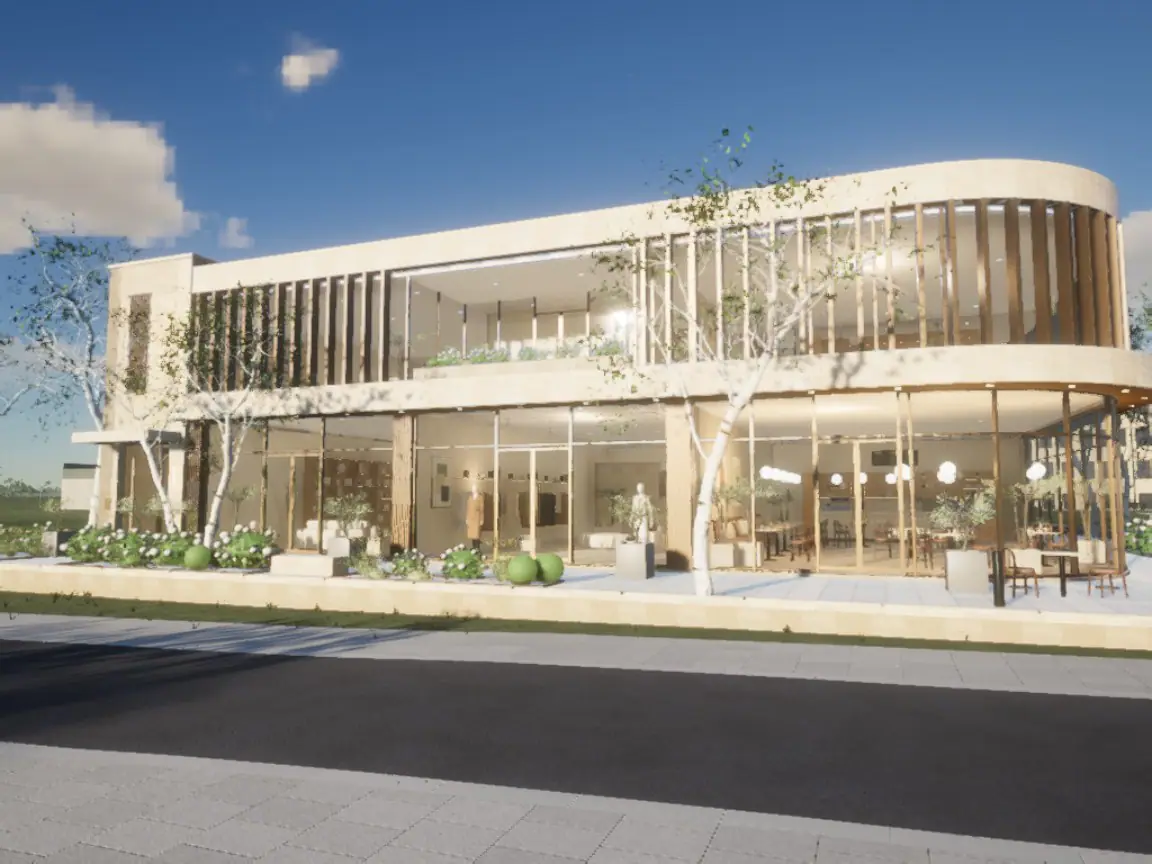
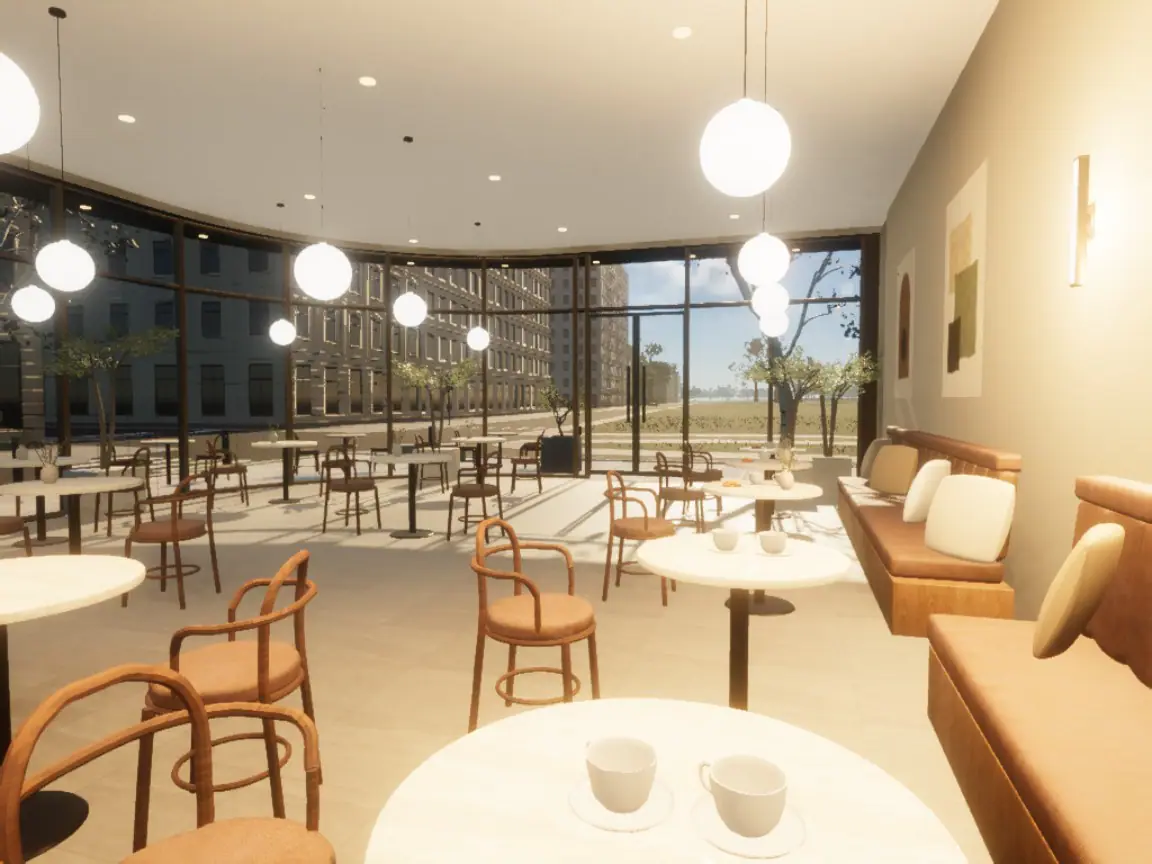
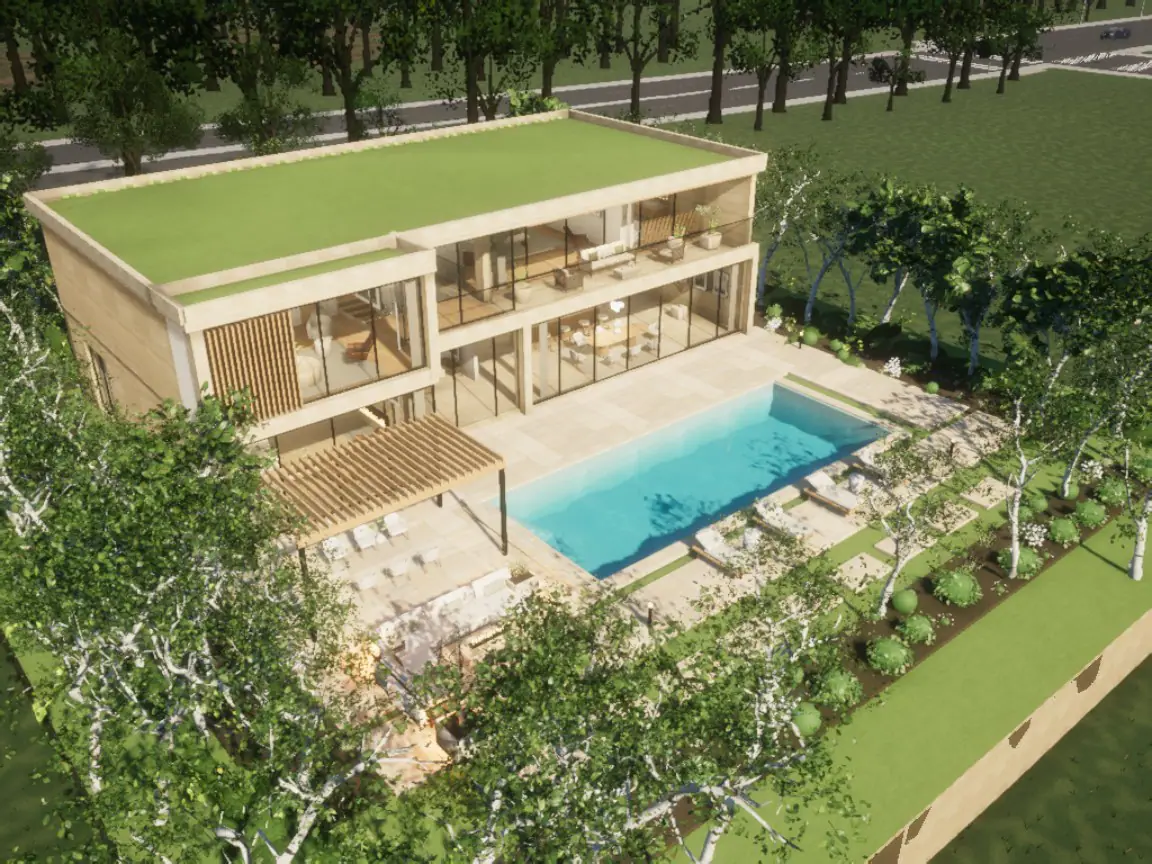
Around the main streets, the city is open land on the real cadastre. Buy a lot, place Villa Linden or the Kontor Hof on it, and walk through every room in the browser.
See the lots for sale →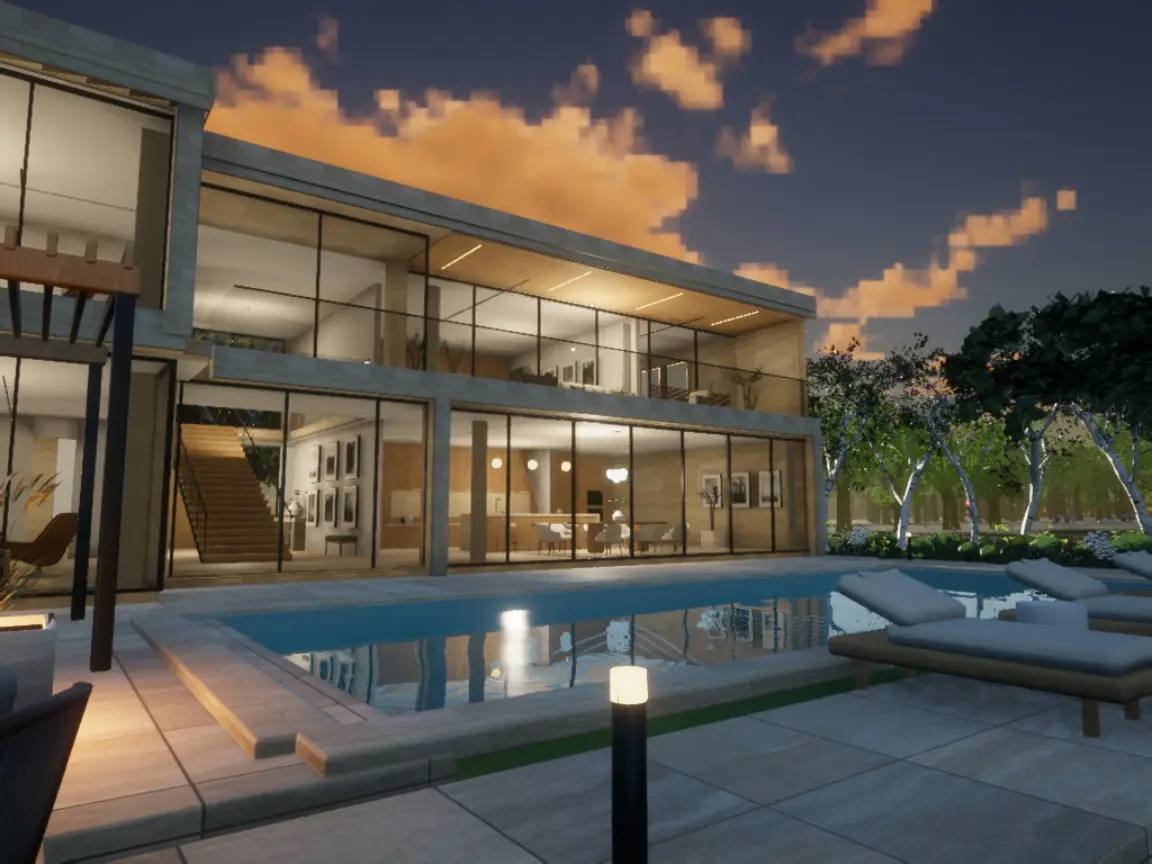
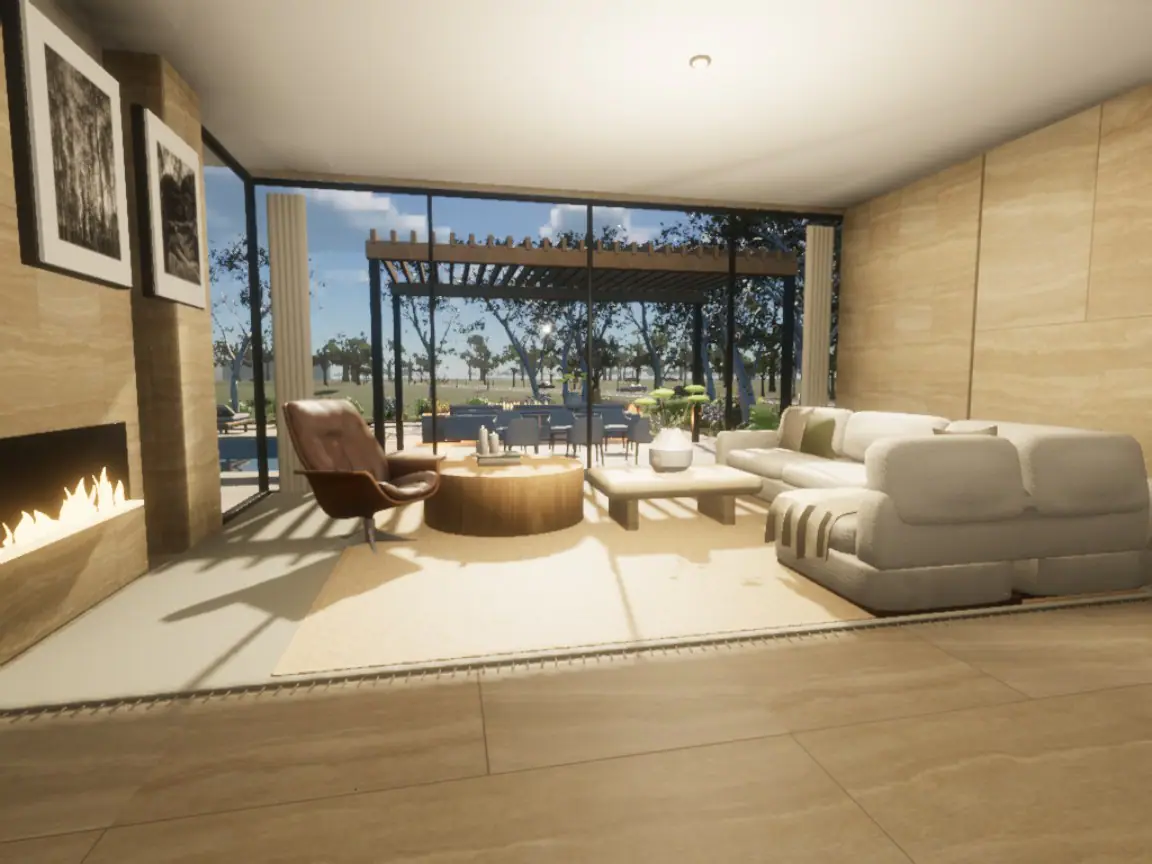
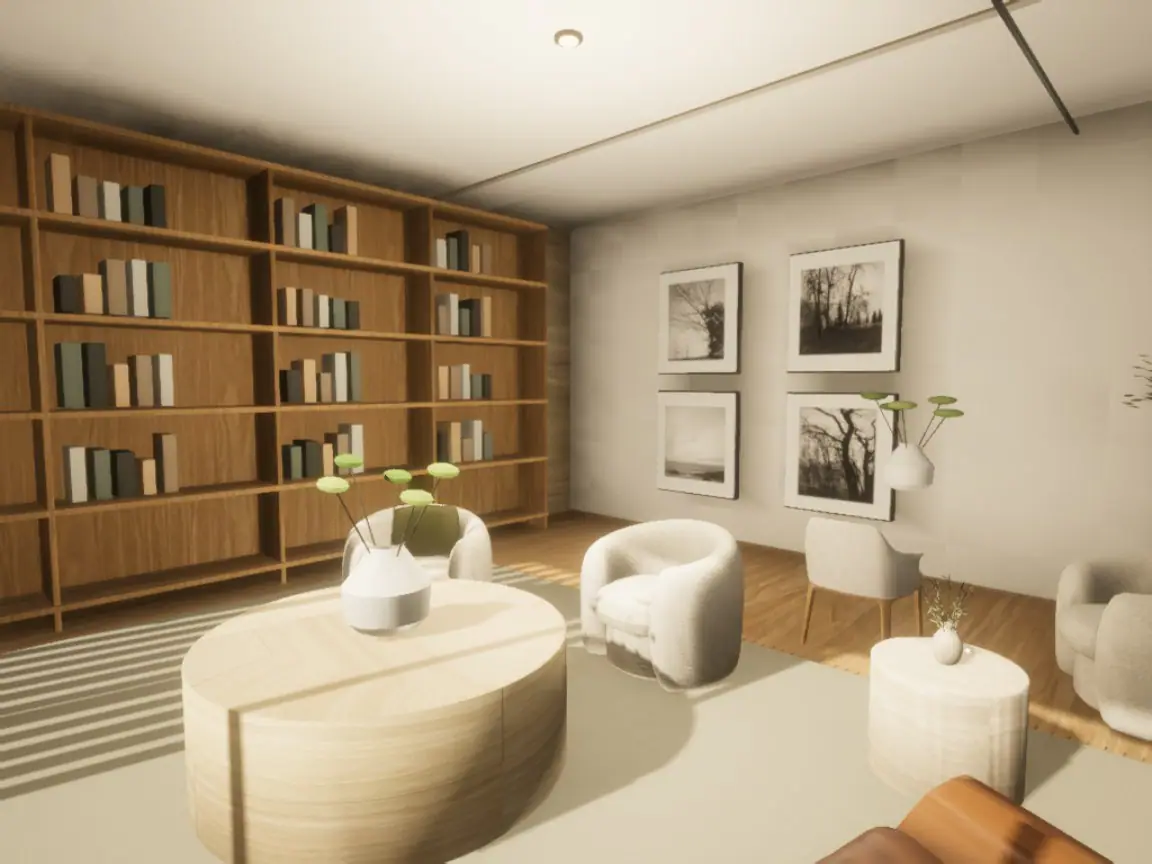
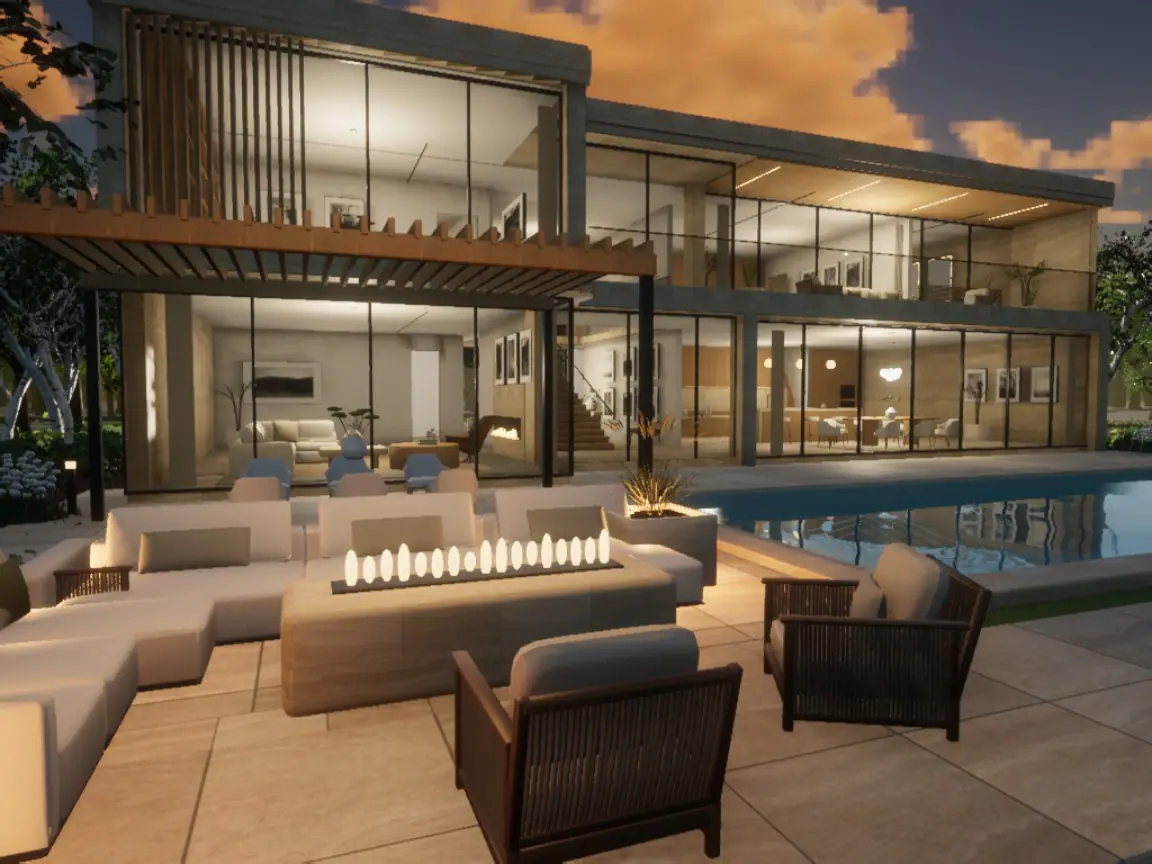
The 3D world runs in a current Chrome, Edge or Safari (WebGPU). This page runs everywhere.